The Narsarsuaq Museum not has set opening hours. Because the airport closed within the spring, few guests come to this distant settlement in southern Greenland. Nevertheless, if somebody asks for Ole Guldager’s home and goes to ask him to open it, he’s pleased to oblige. The museum occupies one of many barracks of the previous navy base, a protracted wood constructing painted pink with a brick chimney. Beside the doorway sits the radial engine of a World Battle II plane, corroded by many years of publicity to the weather. Behind the constructing stretches the airstrip that U.S. troopers inbuilt report time. At this time, nevertheless, that very same nation seems not as an ally from the previous however as a rising risk to the island’s sovereignty and pure assets, particularly in locations like Narsarsuaq, one among three bases the USA would search to reopen.
When Guldager activates the lights, uniforms, rifles and carbines, discipline telephones, a steel stretcher from the outdated hospital, slot machines and letters confiscated by censors that described excessive isolation and by no means reached their vacation spot emerge from the gloom. The rooms reconstruct the each day lifetime of the 1000’s of U.S. servicemen, pilots, and nurses who handed by the previous base. Among the many a whole lot of images are a number of of Marlene Dietrich, taken in 1944. For a number of hours, the actress introduced a little bit of Hollywood glitz to that inhospitable nook of fjords and mountains to carry the troops’ spirits.
Guldager arrived in Narsarsuaq as a baby. He was born in Denmark, however his father labored on the civil airport into which the previous navy set up was transformed after the Individuals left within the late Nineteen Fifties. A historian and archaeologist — and one of many island’s few beekeepers — he has devoted a lot of his 58 years to researching the place the place he grew up and selected to remain.
The final aircraft landed in April. The airport was closed as a result of one other one opened in Qaqortoq, the regional capital, the place about 3,000 folks dwell, and it made no sense to take care of two for such a small inhabitants. However the actuality is that since then Narsarsuaq has been emptying out. Guldager estimates that of the 150 residents it had, about 40 stay. All the things revolved across the airport, which for greater than six many years was the principle gateway to the island’s south, dealing with 1000’s of passengers every summer time. Now there are weeks when barely a dozen guests arrive. The resort, one among Greenland’s largest, closed its doorways the identical day the airfield shut down.
Amongst those that don’t plan to depart is Storch Lund. The grandson of Henrik Lund — the poet who wrote the lyrics to Greenland’s anthem — he grew up on a farm throughout the fjord and moved to this shore as an adolescent to work as a mechanic’s apprentice. He went on to run the airport for greater than 20 years, and likewise ran a café and a memento store that closed a number of months in the past. He additionally began an organization to move vacationers to different settlements. At this time, solely one among his boats nonetheless operates with low demand; the opposite two stay moored. At 69, he finds it laborious to simply accept that “nothing occurs in Narsarsuaq anymore.”
It’s into that void that the USA now reappears.
Because the village withers, the shadow of Donald Trump lengthens over it. The U.S. president, who tried to purchase Greenland from Denmark throughout his first time period, threatened earlier this yr to take management of the island “the simple method or the laborious method.” Tensions eased after a number of European allies deployed troops to the Arctic territory in help of Danish sovereignty, and the disaster moved onto a diplomatic observe. For seven months representatives of Denmark and Greenland have been negotiating behind the scenes in Washington with the Trump administration over the phrases of an growth of the world’s main navy energy on the planet’s largest island, house to simply 56,000 folks.
In these talks, the USA calls for sovereignty over the territory occupied by any future U.S. navy installations on the island — a standing just like that of British bases in Cyprus — a requirement Danish and Greenlandic representatives are unwilling to simply accept.
Washington’s technique rests on the bilateral protection settlement signed with Copenhagen in 1951, a treaty that permits, upon request, an expanded U.S. navy presence on this territory of the Kingdom of Denmark. Normal Gregory Guillot, head of U.S. Northern Command, knowledgeable the Senate in March of the intention to determine three new “protection zones” in Greenland to strengthen surveillance of Russian nuclear submarines and counter China’s rising affect within the Arctic.
In Could, 4 weeks after Narsarsuaq’s worldwide airport was downgraded to a heliport, U.S. Marine Corps personnel and representatives of the U.S. Embassy in Denmark arrived to examine the airstrip, the deep-water port, and different services on the former base.
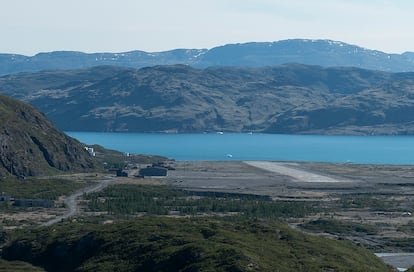
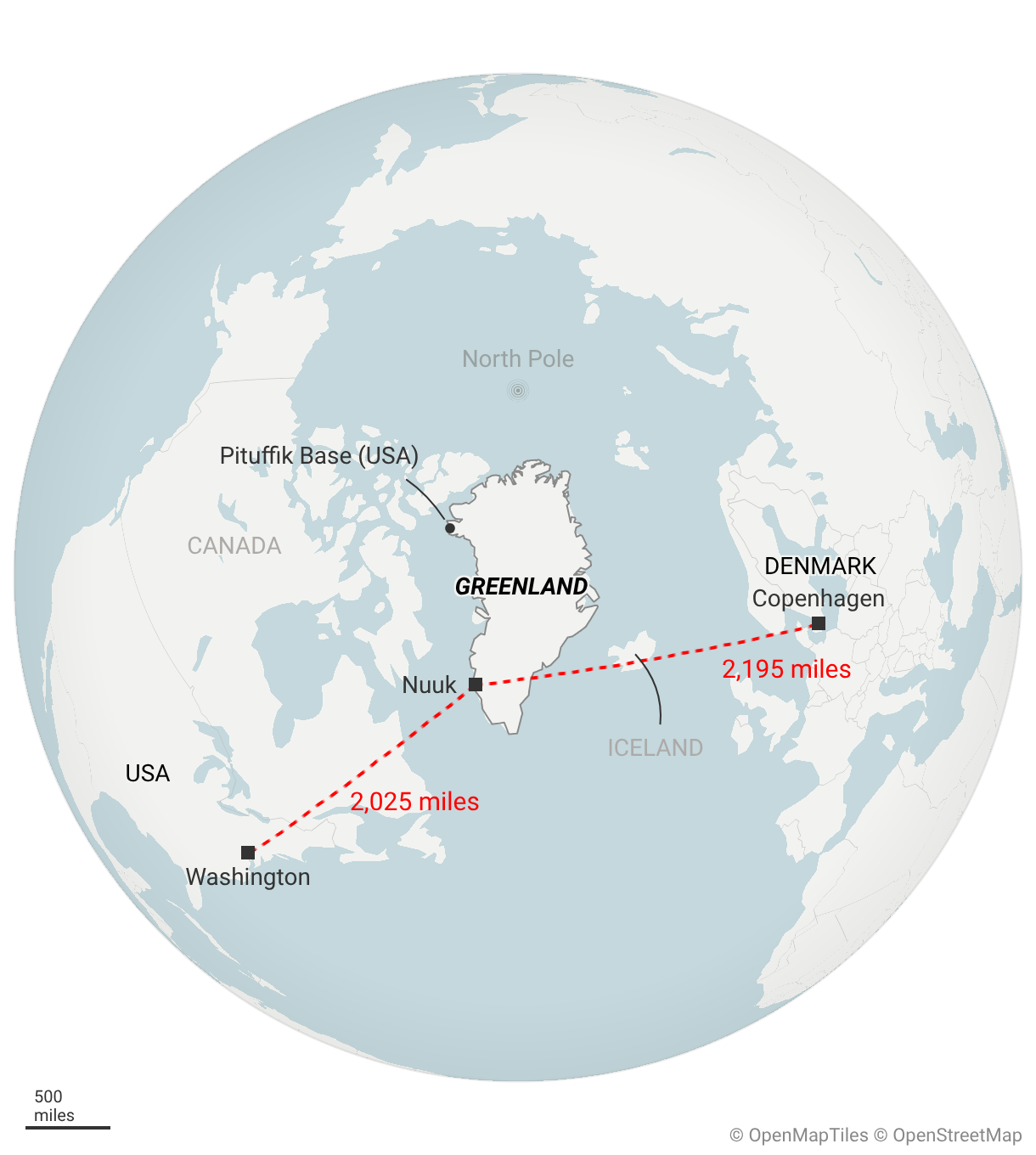
Guldager fears that the return of U.S. troops will finally evict the residents who nonetheless maintain on in Narsarsuaq. “We’re going to lose our properties and have to depart the place the place we’ve got lived and labored all our lives,” he laments. Creator of a e book concerning the dozens of navy installations the USA inbuilt Greenland throughout the Nazi occupation of Denmark, Guldager remembers that throughout the 1953 growth of the Pituffik base —the one one Washington nonetheless maintains on the island, within the northwest — dozens of Inuit households had been forcibly relocated 80 miles from their properties.
“The Individuals constructed every little thing, however that is my house,” Guldager emphasizes. With nostalgia he remembers how in simply three years that uninhabited plain grew to become a city with roads, workshops, mess halls, a hospital, a cinema, a basketball courtroom and a fitness center. Within the dying days of World Battle II about 4,000 folks lived there, greater than in another Greenlandic settlement on the time.
Code-named Blue West One, the Narsarsuaq base was a part of a series of stops essential for ferrying navy plane from America to the fronts in Europe and North Africa. Greater than 10,000 plane refueled or had been repaired there throughout the battle.
The US deserted the bottom in 1958, leaving a deep environmental footprint; a poisonous legacy for a inhabitants whose id is dependent upon stability with its environment. The coastal panorama was strewn with rubble, scrap steel, pipes, batteries and 1000’s of rusty drums. A number of miles away, the outdated navy hospital, which had capability for 250 beds, burned down within the Nineteen Seventies. Nobody eliminated the asbestos panels, and small white fragments of this poisonous materials lie scattered throughout the valley. Residents concern the sturdy winds will proceed to hold harmful particles towards the village, though at the moment they’re extra fearful about Donald Trump.
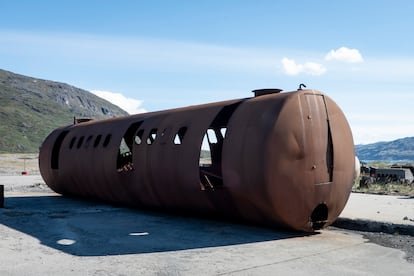
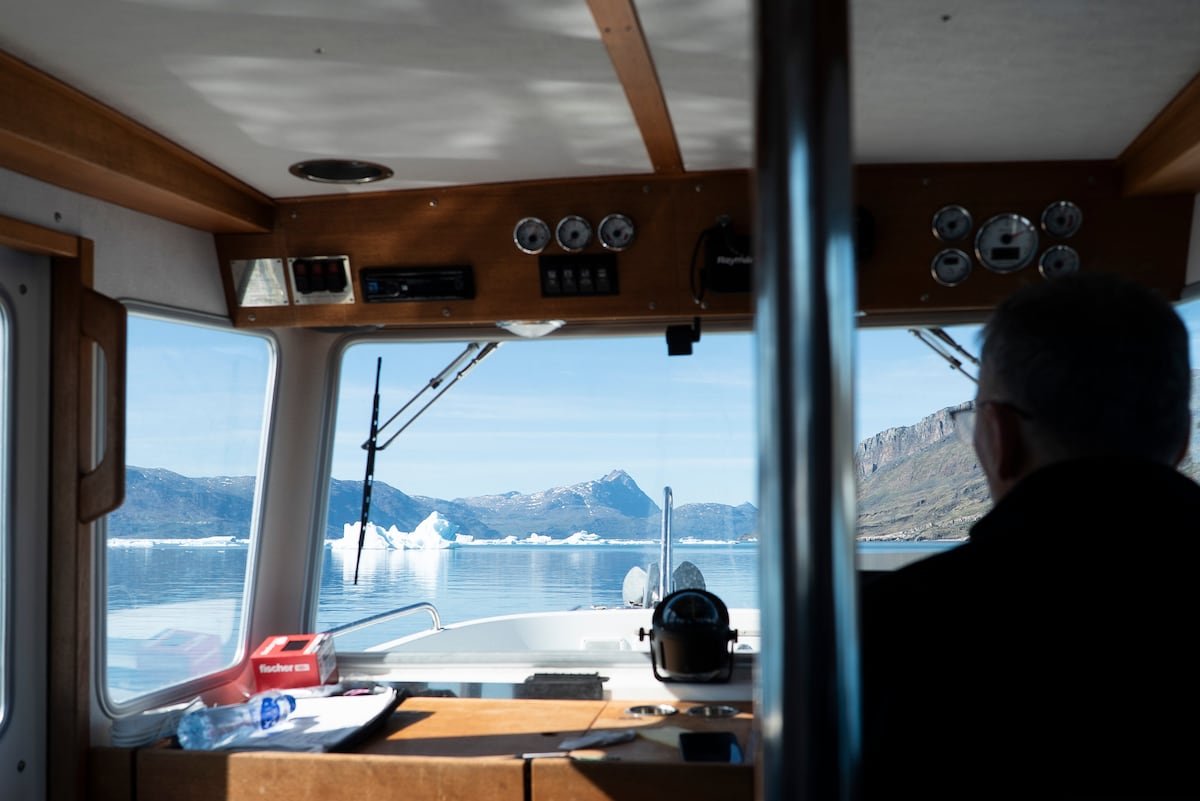
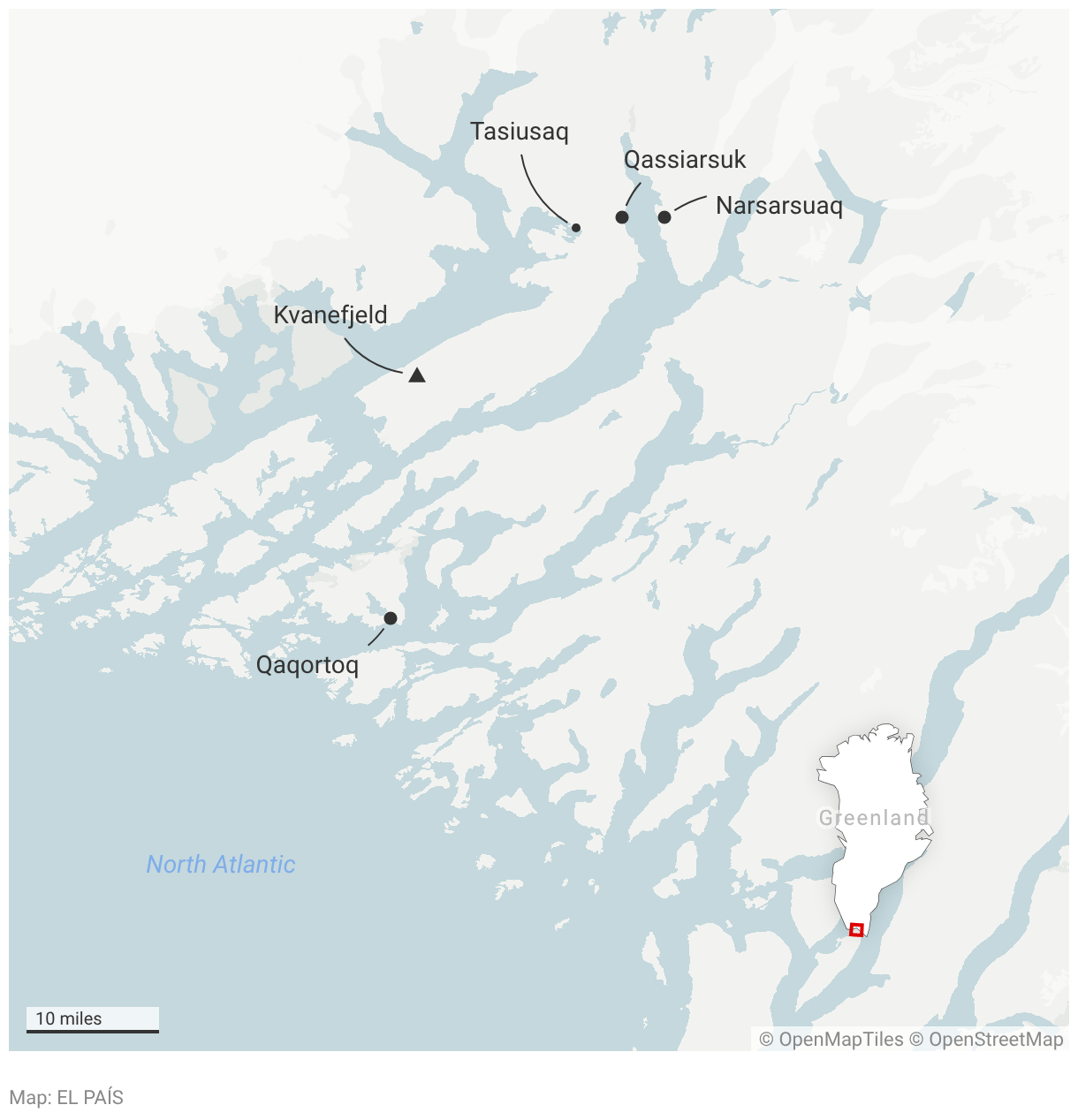
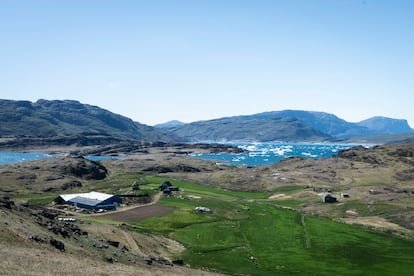
The implications of the airport’s closure and the specter of a U.S. return are additionally felt throughout the fjord. Though lower than two miles aside, Qassiarsuk and Narsarsuaq belong to totally different worlds. Although crossing that stretch of water takes barely quarter-hour, ice buildup, sturdy winds, or dense fog can lower communication between the 2 shores for days. Qassiarsuk stands on the stays of the farm the place Erik the Purple settled on the finish of the tenth century after being exiled from Iceland. There he named the territory Groenland (inexperienced land, in Previous Norse) and laid the foundations for Viking colonization.
Removed from the traditional frozen picture, Qassiarsuk dazzles in summer time amid hills of intense inexperienced dotted with homes painted shiny pink, yellow, and blue. Though the village has barely 50 inhabitants, it’s one among Greenland’s fundamental livestock facilities. This exercise, like agriculture, is concentrated nearly completely within the strip of the island south of the Arctic Circle.
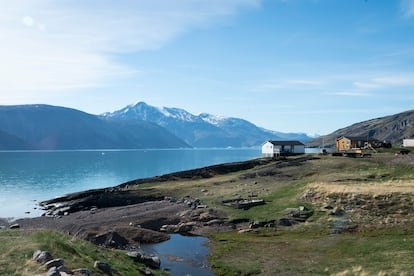
A five-mile path results in Tasiusaq, the place a single household retains the farm and the guesthouse operating. There, Aviaja Lennert and her son’s fiancée bustle within the kitchen to arrange dinner for a pair of German friends who’re about to reach with their backpacks after greater than two hours strolling from Qassiarsuk. Getting across the island requires persistence: with out roads connecting settlements, transport is dependent upon boats and helicopters, and when water will not be concerned quick journeys are made in a buggy, by snowmobile, or on foot. To replenish power after the stroll, the hosts have ready a menu that features selfmade bread, fish soup and roasted lamb with native potatoes and wild herbs they gathered themselves. For dessert, rhubarb compote.
Lennert divides her time between tending the farm’s 600 sheep, taking care of vacationers, and educating the few kids at Qassiarsuk’s college. Regardless of her efforts to diversify revenue, the household faces a precarious interval after the airport’s closure. This summer time they’ve obtained far fewer friends than in earlier years. Now one other concern has resurfaced that Lennert thought had been banished: mining, a latent risk able to ruining the pure assets on which their livelihood relies upon.
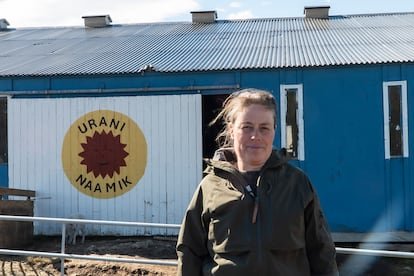
Her farm is close to Kvanefjeld, a deposit that holds one of many world’s largest reserves of uncommon earths and uranium. Lennert thought that risk had handed 5 years in the past when she tearfully celebrated the electoral victory of Inuit Ataqatigiit, the ecologist occasion that had promised to ban uranium extraction to curb Kvanefjeld’s exploitation. She was one of the vital energetic voices within the Urani Naamik (No to uranium) motion, whose cheerful orange solar stays painted on the facet of her barn. “It is rather vital for us to have wholesome nature from which we are able to receive our meals,” she argues to elucidate her agency opposition to extractive tasks that would contaminate the realm. At this time she worries about Trump — whom she refers to as “the unnameable” — each for his curiosity in controlling the island and for his want for the immense wealth of its pure assets.
Whereas Kvanefjeld stays blocked, Washington’s gaze has turned to a different huge uncommon earth deposit a number of miles away. Tanbreez hosts reserves virtually freed from uranium, so its exploitation will not be legally prohibited. Conscious of its strategic worth, U.S. diplomacy maneuvered to stop the undertaking from falling into Chinese language arms and facilitated its switch to the New York agency Important Metals. The operation has the agency backing of the Trump administration, which mobilized the state export-credit company to inject as much as $120 million, amid experiences of investor curiosity linked to the magnate’s circle —together with his son Donald Trump Jr. — within the mine’s improvement.
The U.S. president insists on maintaining the strain. Though he toned down his threats from February onward, on the NATO summit held in July in Ankara he reiterated that the huge island “ought to be managed by the USA and never by Denmark.” In early August, Trump posted a picture on social media exhibiting a large determine of the president looming menacingly over a settlement within the Arctic territory, accompanied by a terse message: “Hi there, Greenland.”
Final week that extractive voracity ran up in opposition to the island’s regulatory wall. The Greenland authorities ordered the postponement of a controversial oil exploration undertaking within the territory’s east led by Greenland Power, a Texas-based agency linked to Trump’s circle. The corporate, which had moved the mandatory tools, meant to start out drilling with out the required permits, prompting a “severe warning” from native authorities.
EU seeks to strengthen its affect
Confronted with Washington’s advances, the European Union is attempting to stake out floor and strengthen its affect within the Danish autonomous territory. Barry Andrews, an Irish MEP and the European Parliament’s rapporteur for relations with Greenland, requires a standard entrance and warns in opposition to the White Home’s ambitions. “We should make it clear to the Trump administration, repeatedly, that Greenland’s sovereignty have to be revered; we can not belief the USA anymore,” he stresses by e mail. Andrews is pushing to double European funding within the island to €500 million within the subsequent finances framework.
Alongside the identical strains, Danish MEP Christel Schaldemose, a vp of the European Parliament, advocates “investing extra and creating higher improvement alternatives.” The social democrat stresses by cellphone that the EU ought to be the island’s most popular associate, whereas all the time respecting that selections about useful resource extraction and the way forward for mining relaxation completely with Greenlanders.
That proper to resolve is what led the southern neighborhood to mobilize en masse in opposition to the Kvanefjeld mega-project when, 5 years in the past, they felt their lifestyle threatened. In that civic resistance Inga Gísladóttir performed an energetic function, an unusually multifaceted skilled — social employee, IT specialist and air site visitors controller — who additionally travels the world as a narrator of Norse mythology. Born in Iceland, Inga has simply accomplished 15 years in Greenland and has returned from three months in Qaqortoq coaching controllers for the brand new airport.
Her stance on the geopolitical scramble for the island’s assets is categorical: “Simply because this can be a huge, sparsely populated land doesn’t imply anybody can come and take it over; it belongs to those that need to protect it.” In a matter of days she is going to go away Narsarsuaq, not sure the place she is going to go subsequent. After getting back from a stroll to see for the final time the glacier that looms a number of miles from the village, Gísladóttir brushes away mosquitoes as she evokes the deep Inuit connection to the land: “Right here the connection with nature will not be extractive; it’s not seen as one thing to revenue from, however as a heritage we should take pleasure in and protect for future generations.”
Join our weekly e-newsletter to get extra English-language information protection from EL PAÍS USA Version