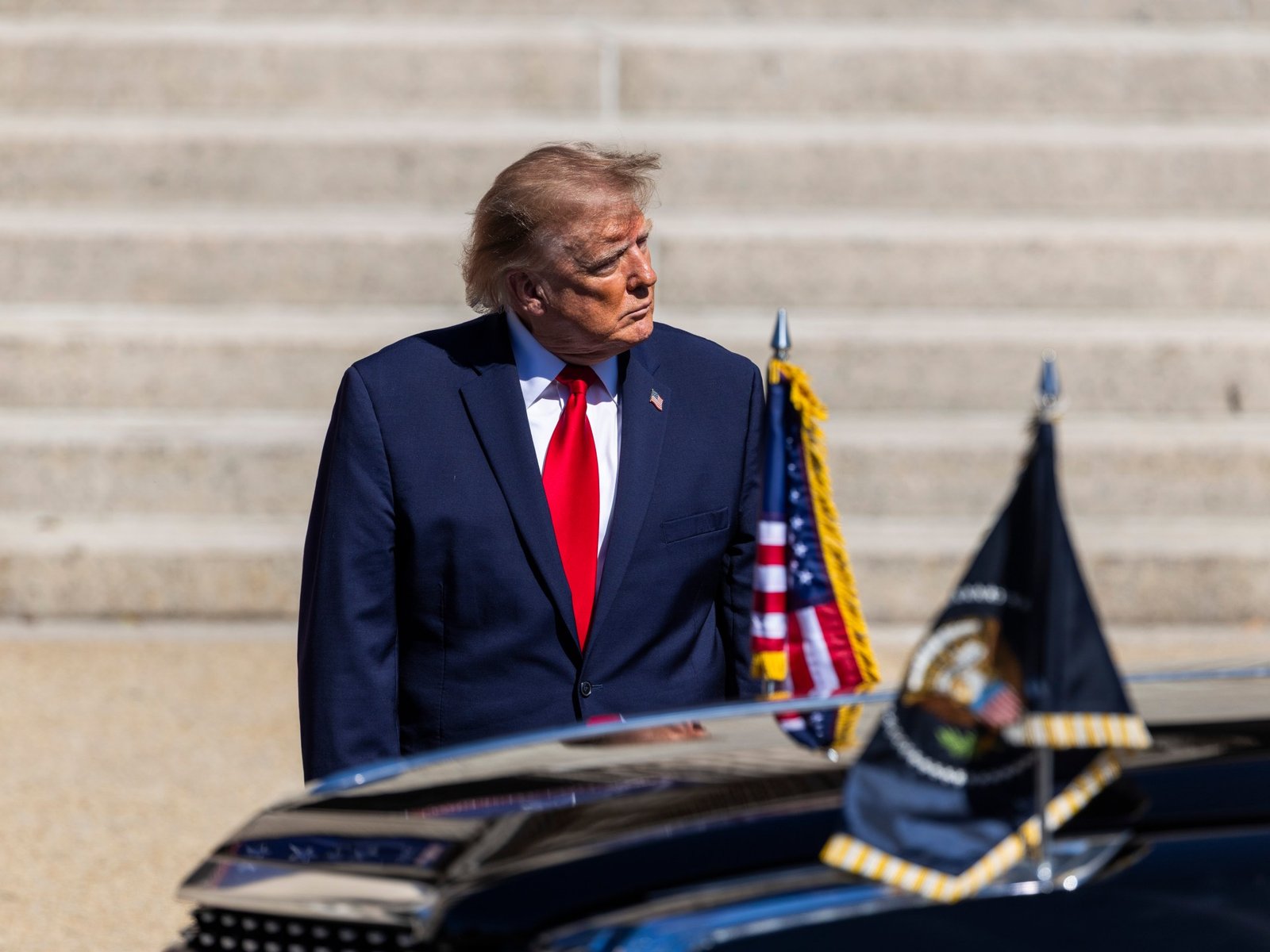
United States President Donald Trump has reportedly dominated out an Iranian proposal to reopen the Strait of Hormuz inside every week, in line with unnamed US officers cited by The Wall Avenue Journal.
Trump’s rejection comes simply hours after Iran put ahead a brand new roadmap to opening the strait, by means of which one-fifth of worldwide oil and pure fuel is shipped throughout peacetime – and days after the US president threatened to “annihilate” Iran from the ground of the UN Normal Meeting.
Advisable Tales
checklist of three gadgetsfinish of checklist
Right here’s what we find out about Trump’s response to the proposal and what may come subsequent within the battle.
What was in Iran’s seven-day proposal?
The proposal lays out a roadmap to open the Strait of Hormuz with regular maritime passage inside every week.
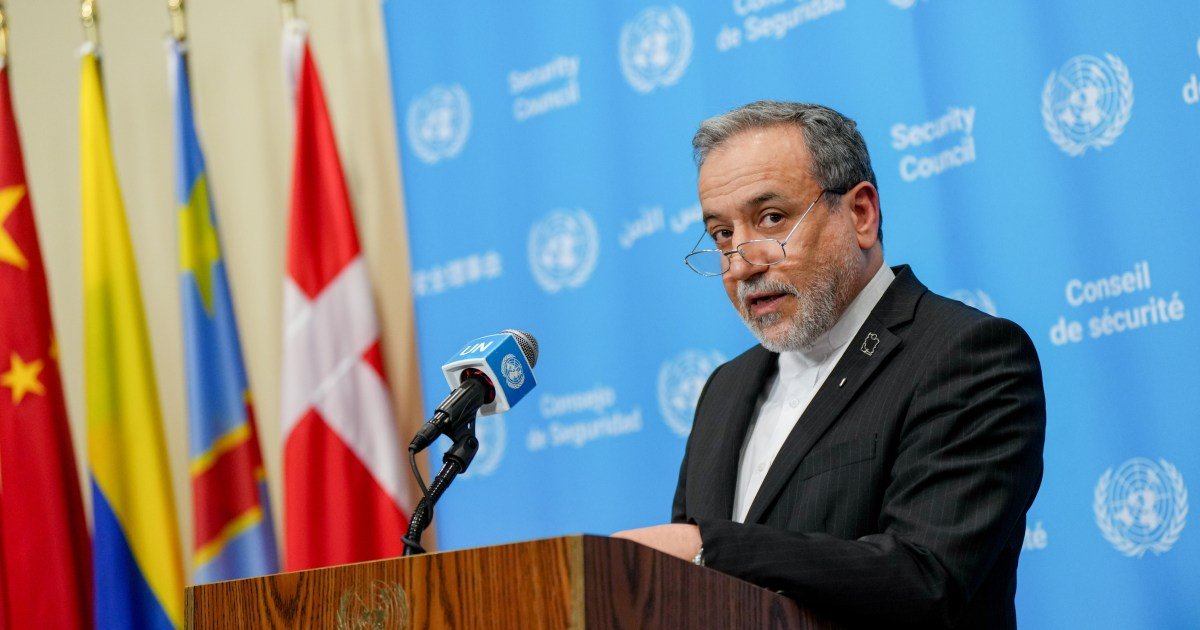
Talking to reporters on Friday, Iran’s Overseas Minister, Abbas Araghchi, mentioned the proposal requires the US to take actions it dedicated to below the failed June 17 Islamabad Memorandum of Understanding (MoU) on an accelerated timeframe.
These actions embrace releasing $12bn in frozen Iranian property, lifting Iranian oil sanctions and ending the US’s naval blockade on Iranian ports, Araghchi advised reporters at a personal media briefing on Thursday, in line with The New York Occasions. He additionally mentioned all hostilities, together with in Lebanon, the place Israel nonetheless occupies a part of the south of the nation, should stop throughout the seven-day interval.
Araghchi mentioned as soon as the US circumstances are met – which he estimated would take 4 or 5 days – the Strait of Hormuz could possibly be reopened and negotiations with the US on a “remaining deal” would begin on day seven.
He mentioned the method may start as quickly because the US accepts the plan.
“The selection now rests with the US,” mentioned Araghchi. “Iran doesn’t settle for coercion, threats or intimidation.”
How has the US responded?
The US authorities has not publicly responded to the plan.
Nonetheless, The Wall Avenue Journal reported that Trump had rapidly dominated it out, citing unnamed US officers.
They mentioned Trump was sceptical about whether or not Iran would fulfil US calls for. Trump’s most persistent calls for have been that Iran by no means be capable to purchase a nuclear weapon and that it restore free passage in Hormuz.
Iran says it is not going to talk about its nuclear programme till the circumstances it has laid down are met, which has led to an deadlock between the 2 sides.
In the meantime, a US official has advised Al Jazeera that Washington is in no hurry to reply to Iran’s proposal and that it sees itself as being in a robust place with respect to the Strait of Hormuz.
Late on Friday evening, Trump posted a picture of a map on his Reality Social platform that labelled it “Trump Strait”.
Trump has beforehand mentioned the US has “complete management” over the waterway and threatened to designate it as a US territory. Iran strongly denied that, saying it has full management of the strait.
Are peace negotiations nonetheless occurring?
Sure, however largely not directly. On the UN Normal Meeting in New York this week, Qatar has been passing messages between the 2 sides as an middleman.
Each the US and Iran have mentioned the door to diplomacy stays open and a US official advised Al Jazeera that ongoing mediated talks are “optimistic and constructive”.
Qatar, a key mediator within the battle, mentioned its overseas minister spoke with Iranian President Masoud Pezeshkian on Friday about de-escalation and the circumstances for renewed dialogue.
Earlier this week, US officers, together with particular envoys Jared Kushner and Steve Witkoff, held mediated discussions with Iranian counterparts in New York, a gathering Trump described as “excellent”.
Nonetheless, there’s “an infinite quantity of scepticism in Washington that the 2 international locations are on the identical web page,” in line with Thomas Warrick, senior fellow on the Atlantic Council.
“I feel that one of the best we will hope for is that this provide from the Iranian overseas minister does result in additional discussions to attempt to make clear what preconditions Washington is keen to work with,” Warrick advised Al Jazeera.
The place does the US-Iran standoff go from right here?
Presumably in direction of renewed hostilities.
In keeping with the US officers cited in The Wall Avenue Journal, Trump advised his aides he expects to hold out a brand new bombing marketing campaign towards Iran after the US midterm elections in November.
That comes after Trump advised the UN Normal Meeting he was contemplating whether or not to “annihilate” Iran and “drive them into hell” within the absence of a deal.
On the identical time, Trump has mentioned he believes a deal to finish the battle will come shortly after the midterms.
Paul Musgrave, an affiliate professor of presidency at Georgetown College in Qatar, advised Al Jazeera that Trump “doesn’t wish to finish the battle on unfavourable phrases” and that the results of November’s elections will seemingly assist steer his coverage.
If Trump’s Republican celebration suffers extreme setbacks within the elections – and loses its majority in Congress – he might go for “unilateral actions, together with maybe a resumption of warfare”, mentioned Musgrave.
“That may additionally imply that Iran would have delivered a very stinging political blow to President Trump,” Musgrave continued, including this might set off short-term escalation, “adopted by negotiation in order that the White Home doesn’t seem like it’s simply surrendering”.