This text was initially printed in Vol. 6 No. 2 of our print version.
The title of István Kertész (born István Dénes Kertész; identified professionally as Stephen D Kertesz, 1904–1986) is comparatively obscure in his native Hungary, regardless of the pivotal position he performed in each Hungarian and worldwide diplomacy from the Forties till his demise. In 1942, following the re-annexation of the Partium and Northern Transylvania to the Kingdom of Hungary, he served as first secretary of the Hungarian Legation in Bucharest. A 12 months later, he grew to become a central determine within the diplomatic efforts of the Hungarian authorities because it sought to exit the conflict. His effectiveness was rooted not solely in a private dedication to the Hungarian homeland, but additionally in his intensive worldwide background.
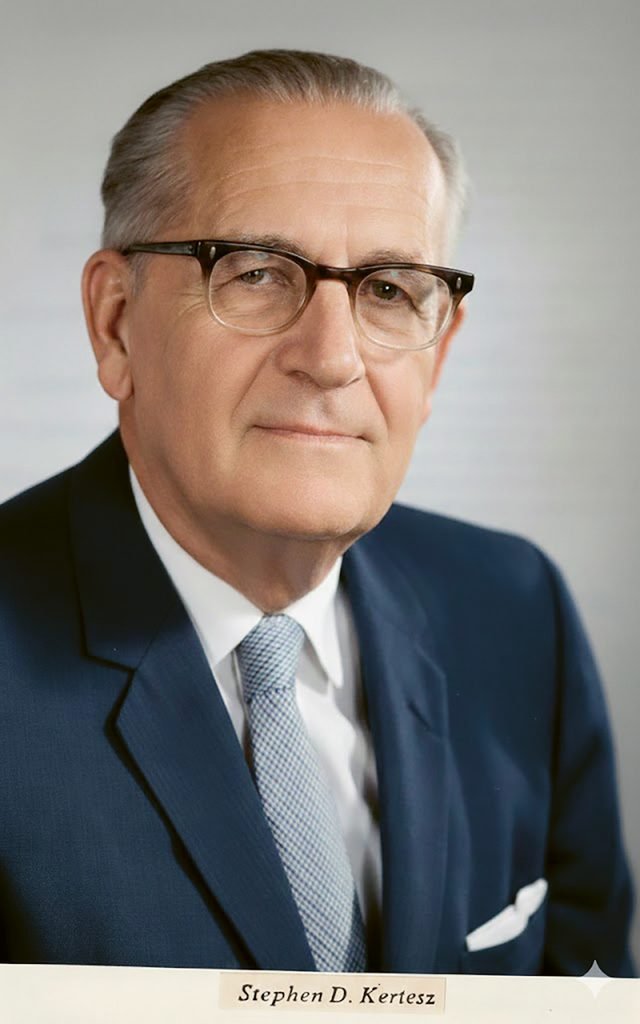
PHOTO: Prof. Dr. Balázs M. Mezei
Born in Putnok, in the northeast of Hungary, to a Catholic convert father (Lajos Kohn) and a German-speaking mom (Mária Stolcz), Kertesz was raised in a affluent bourgeois setting and practised his Christian religion all through his life. He earned a legislation diploma from Pázmány Péter College (immediately Eötvös Loránd College) earlier than learning on the Budapest Academy of Commerce. In 1926, he attended the Consular Academy in Vienna, the place he refined the German language expertise he had acquired at residence. He subsequently pursued postgraduate research on the College of Geneva, the place his coursework was carried out in French. Between 1935 and 1937, he held fellowships in the US and Nice Britain, via which he achieved fluency within the English language. In 1938, he served as an official consultant on the Worldwide Courtroom of Justice in The Hague. Following the Arrow Cross coup that succeeded Governor Miklós Horthy’s failed try to exit the conflict, Kertesz was arrested as a consequence of his common contact with Anglo-American embassies. He managed to flee captivity and remained in hiding till the Soviet Military entered Budapest. After the conflict, he earned his habilitation at Pázmány Péter College with a thesis titled The Worldwide Authorized Accountability of States for Accidents to Alien Non-public People. That very same 12 months, the Provisional Nationwide Authorities appointed him head of the Political Division of the Ministry of International Affairs.
From this level ahead, Kertesz grew to become a big determine in each Hungarian home and international coverage. In 1946, he performed a vital position on the Paris Peace Convention as Secretary-Common and Authorized Adviser to the Hungarian Peace Delegation. He participated in drafting the peace treaty that outlined Hungary’s borders and sovereignty within the post-Second World Battle period. Subsequently, from 17 March to 26 August 1947, he headed the Hungarian Legation in Rome with the rank of ambassador. All through this era, he maintained his worldwide connections and was conscious about the systematic course of by which the Soviet Union ready and applied totalitarian strategies of governance in Hungary and different occupied East Central European nations. Possessing correct info that the Allied powers didn’t intend to impede this course of, Kertesz meticulously deliberate his resignation, stepping down from his diplomatic put up in August 1947. In February 1948, he emigrated to the US together with his spouse and youngsters.
At this juncture, he started an instructional profession corresponding to fellow émigrés equivalent to John Lukacs or Thomas Molnar. Nevertheless, in contrast to the latter, Kertesz positioned a higher emphasis on institutional management and inner political consultancy. In 1950, he joined the college of the College of Notre Dame in Indiana, particularly throughout the Committee on Worldwide Relations led by Waldemar Gurian (1902–1954). Kertesz assumed the management of the Committee in 1955. Gurian, a Russian-born Jewish convert to Catholicism, was an instrumental determine in educating American tutorial and political circles on the historical past, tradition, and political background of the Soviet Union; he and Kertesz shared an in depth friendship till Gurian’s premature demise. Whereas Kertesz was the pure successor to Gurian, contemporaries famous vital variations of their temperaments. Gurian was an impulsive determine and a prolific writer of fashionable titles, together with The Rise and Decline of Marxism1 and The Catholic Church in World Affairs.2 Kertesz, in contrast, was described by colleagues as a sublime, reserved gentleman: soft-spoken, empathetic, and conscientious to the purpose of being a workaholic. He devoted himself tirelessly to the institute’s affairs, commuting often between Washington, DC, and South Bend, Indiana (the house of Notre Dame College).
Below his management, Notre Dame’s Committee on Worldwide Relations advanced, and Kertesz grew to become the founding father of the college’s new Institute for Worldwide Research in 1968, which he directed till his retirement in 1974. The Institute grew to become a premier unit of the college, performing pioneering work within the institution of political science and diplomacy as tutorial disciplines within the US. Kertesz additionally collaborated intently with the founding father of the college’s huge library system, the Hungarian-born Premonstratensian priest Astrik L. Gabriel (1907–2005), guaranteeing that the college’s Hungarian-language assortment grew to become exceptionally vital. Kertesz leveraged his multilingual erudition and worldwide community to repeatedly enrich the library for each scholarly and scholar use.
Kertesz’s scholarship constantly revolved round worldwide diplomacy, and particularly the authorized and philosophical ideas of peace. His early works specialised in worldwide treaties and authorized questions, together with The Regulation of the Consulate, Common Revision of Peace or Particular Revision of the Treaty of Trianon?, and The Worldwide Accountability of the State (all three works in Hungarian).3 His four-volume 1947 publication La Hongrie et la Conférence de Paris4 launched the first supplies of the peace negotiations that concluded the Second World Battle. His first American publication, ‘Strategies of Soviet Penetration in Japanese Europe’, appeared within the Gurian-edited quantity The Soviet Union: Background, Ideology, Actuality.5 In 1953, he printed a research in German on the expulsion of Germans from Hungary (Die Vertreibung der Deutschen aus Ungarn).6 Subsequently, he centered more and more on worldwide diplomacy in quite a few volumes, equivalent to What America Stands For,7 East Central Europe and the World,8 Nuclear Non-Proliferation in a World of Nuclear Powers,9 and The Job of Universities in a Altering World.10 He repeatedly emphasised that small nations like Hungary should be notably attuned to the actions of worldwide powers, as their destinies are decided by the selections of those entities. He offered detailed analyses of how the Paris Peace Treaties formed the post-war European order, notably concerning the East Central European states.11 An identical theme was explored within the extra broadly centered quantity The Destiny of East Central Europe: Hopes and Failures of American International Coverage.12 Inside the context of Chilly Battle diplomacy, he examined how totalitarian ideology and the nuclear risk remodeled conventional diplomatic observe. In his view, ideologically based mostly programs are incapable of managing worldwide relations in a conventional, pragmatic method.
‘Battle between army superpowers inevitably results in a nuclear Armageddon and should due to this fact be prevented by all means’
His masterpiece, The Quest for Peace via Diplomacy, examined the evolving position and strategies of diplomacy within the mid-twentieth century, notably in mild of the emergence of nuclear weapons and ideological polarization.13 He revealed how conventional, confidential, skilled diplomacy (the ‘previous diplomacy’) had been marginalized in favour of multilateral and public diplomacy (for instance, in our bodies just like the United Nations). He emphasised that conflict as the final word instrument of international coverage had turn out to be completely constrained within the age of nuclear deterrence, leaving diplomacy as the first, and finally the one, probability for peacekeeping. This was additionally his private credo: in each battle, a negotiated diplomatic resolution is feasible as an alternative choice to conflict. He analysed the diplomatic challenges and strategies of the Chilly Battle period, offering a historic overview of the event of recent diplomacy from antiquity to the current. This work introduced not solely issues but additionally potential options, highlighting the worldwide accountability of US international coverage. He burdened the significance of harmonizing nationwide pursuits with frequent objectives and explored the position of knowledge diplomacy and propaganda in ideological conflicts. He underscored that core democratic values—freedom of speech, truthful info, respect for differing opinions, and adherence to each native and worldwide legislation—should be successfully represented. The e book, thought-about Kertesz’s magnum opus, demonstrated from the attitude of an expert diplomat and college professor that in a contemporary world burdened by nuclear weapons and ideologies, diplomacy isn’t merely an possibility however an indispensable situation for survival within the civilizational wrestle for peaceable settlement. The muse of this mission, as one colleague and private good friend aptly put it, was the ‘rock-like integrity’ of Kertesz’s persona, rooted in his Christian religion—an integrity that was expressed via his modesty, helpfulness, and humane judgement.14
Kertesz was not solely a researcher but additionally an energetic public determine. He served as a bridge between the educational world and US international coverage decision-makers. He maintained intensive correspondence with high-ranking American politicians and intelligence leaders, equivalent to CIA Director Allen W. Dulles (1893–1969), repeatedly explaining the risks and strategies of Soviet ideological and army growth. On this regard, he emphasised two elements: first, the acute and harmful nature of Soviet Bolshevik ideology, which aimed to dismantle European civilization via totalitarian violence; and second, the need of opposing this ideology via all peaceable means whereas strictly avoiding the chance of conflict, which might inevitably escalate right into a nuclear conflict able to destroying the very civilization the West sought to protect. In his skilled publications, he repeatedly briefed the American tutorial group and political elite on the scenario in East Central Europe, its implications for world politics, and its cultural and ideological parts. He gave particular consideration to the importance of the 1956 Hungarian Revolution, the scenario of the Catholic Church in Hungary, and the inner mechanisms of violence, in addition to the international coverage aims of the Kádár regime.
‘Diplomacy isn’t merely an possibility however an indispensable situation for survival’
The life’s work of Kertesz, together with his intensive correspondence and notes, could be discovered within the Stephen D Kertesz Papers throughout the On-line Archive of California, a group comprising 182 manuscript containers and several other folders of pictures.15 This assortment accommodates a big quantity of knowledge on Kertesz’s life and his worldwide and Hungarian connections, together with paperwork concerning the Hungarian seek for peace starting in 1943, his correspondence with József Mindszenty, and his documentation of the 1956 Hungarian Revolution.
Whereas primarily a diplomat and historian, Kertesz’s perspective was deeply knowledgeable by his Catholic Christian religion, on the centre of which stood the spiritual, philosophical, ethical, and political idea of peace. He analysed peace in a historic context with a scientific rigour that mirrored his background within the historical past of concepts (Geistesgeschichte). He was conscious not solely of the conceptual and historic contexts, but additionally of their up to date significance. As he wrote:
‘No nation can present safety for itself…Human dignity, charity, and mutual understanding are most necessary for the unity of mankind. Nations want a dream of the long run world greater than they want the facilities of our industrial age. Understanding of the needs of man and of necessary issues of life is a preliminary situation of political and financial cooperation. The mainstream of historical past can be influenced by the concepts of human dignity and freedom, in addition to the mental currents which have flourished in Graeco-Roman and Judaeo-Christian civilizations. These concepts have made fashionable science, the commercial revolution, the harnessing of nuclear power, and the exploration of outer area attainable. We’re on the brink of higher transformations. The Western world is on this path, and the remainder of the human household is following swimsuit. We could strategy a golden age. Males of all religions, races, and political persuasions should shut ranks, as a result of the globe is changing into on daily basis a smaller place the place human failure may make life uncomfortable, if not inconceivable.’16
What’s the up to date significance of Kertesz’s legacy? He was not solely an impressive diplomat and an expert with a broad perspective, but additionally a religious Christian who saved the phrases of the Psalmist in thoughts: ‘I’ll hear what God the Lord will communicate: for he’ll communicate peace unto his folks, and to his saints.’17 Equally, the saying of Jesus: ‘Peace I depart with you, my peace I give unto you.’18 Primarily based on this biblical basis, Kertesz seen peace as a social, political, and particularly an international-political worth. He was a political realist. He noticed clearly that the will for peace is inadequate—attaining and sustaining it requires satisfactory political energy. Subsequently, he supported US peace efforts through the Chilly Battle, which included as an integral ingredient the avoidance of conflict. He believed, and sometimes emphasised, that the place hazard is unavoidable, a peaceable settlement should be reached as shortly as attainable, as seen through the Cuban Missile Disaster or the Korean and Vietnam Wars.
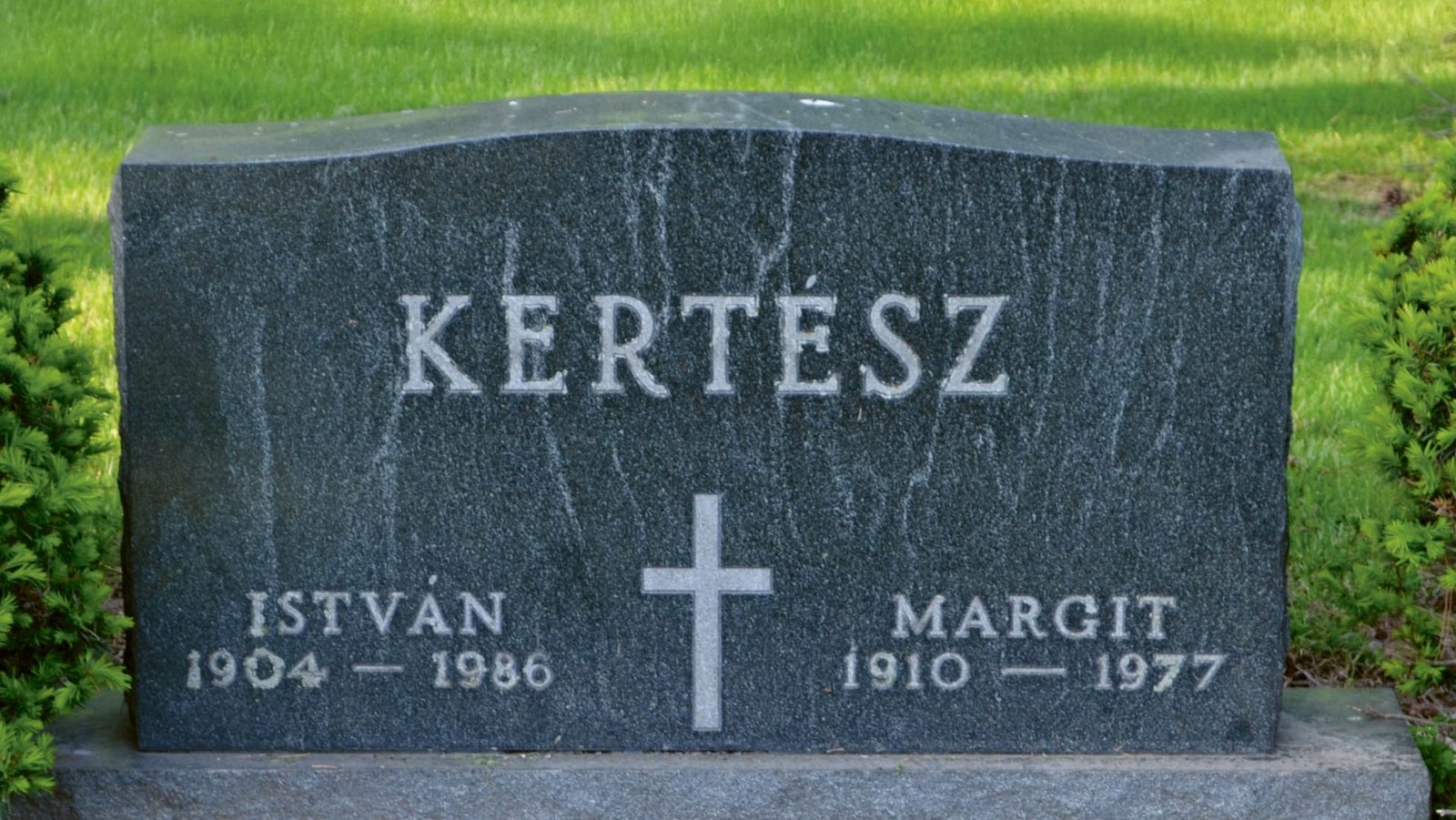
This stays extremely vital immediately. The reasoning of Stephen D Kertesz and others—that conflict between army superpowers inevitably results in a nuclear Armageddon and should due to this fact be prevented by all means—has misplaced none of its validity. As we speak, maybe greater than ever, Kertesz would warn towards the escalation of armed conflicts and urge the creation, upkeep, deepening, and broadening of peace agreements via each attainable means. Kertesz’s headstone is positioned immediately in Highland Cemetery in South Bend—alongside quite a few different Hungarian graves. Though his reminiscence has pale, it’s clear that embracing his legacy stays an unavoidable crucial of political, diplomatic, and mental rationality.19
NOTES
1 Waldemar Gurian, The Rise and Decline of Marxism (Burns, Oates & Washbourne Restricted, 1938).
2 Waldemar Gurian, The Catholic Church in World Affairs (College of Notre Dame Press, 1954).
3 István Kertész, A konzulátus joga (Consulate Regulation) (Dunántúl Pécsi Egyetemi Könyvkiadó és Nyomda Rt., 1932); István Kertész, Általános békerevízió, vagy a trianoni szerződés külön revíziója? (Common Peace Revision, or a Separate Revision of the Treaty of Trianon?) (Magyar Társadalomtudományi Társulat, 1933); István Kertész, Az állam nemzetközi felelőssége (The Worldwide Obligations of the State) (Grill Károly Könyvkiadó Vállalata, 1938).
4 István Kertész, and Zoltán Baranyai, eds, La Hongrie et la Conférence de Paris (Hungary and the Paris Convention) (Hungarian Ministry of International Affairs, 1947).
5 Waldemar Gurian, ed., The Soviet Union: Background, Ideology, Actuality (College of Notre Dame Press, 1951), 85–136.
6 Stephen D Kertesz, ‘Die Vertreibung der Deutschen aus Ungarn’ (The Expulsion of the Germans from Hungary), Südost-Stimmen (particular version), 3/5 (1953).
7 Stephen D Kertesz, and Matthew A. Fitzsimons, eds, What America Stands For (College of Notre Dame Press, 1959).
8 Stephen D Kertesz, East Central Europe and the World: Developments in the Publish-Stalin Period (College of Notre Dame Press, 1962).
9 Stephen D Kertesz, Nuclear Non-Proliferation in a World of Nuclear Powers (College of Notre Dame Press, 1967).
10 Stephen D Kertesz, The Job of Universities in a Altering World (College of Notre Dame Press, 1971).
11 Stephen D Kertesz, Diplomacy in a Whirlpool: Hungary between Nazi Germany and Soviet Russia (College of Notre Dame Press, 1953).
12 Stephen D. Kertesz, The Destiny of East Central Europe: Hopes and Failures of American International Coverage (College of Notre Dame Press, 1956).
13 Stephen D Kertesz, The Quest for Peace via Diplomacy (Prentice-Corridor, 1967).
14 Cf. John C. Campbell, ‘Diplomacy and Nice Energy Politics’, in Kenneth W. Thompson, ed., Diplomacy and Values. The Life and Works of Stephen Kertesz in Europe and America (College Press of America, 1984), 54.
15 Cf. Stephen Denis Kertesz Papers, 1932–1998 (Hoover Establishment Library and Archives), https://oac4.cdlib.org/findaid/ark:/13030/tf2t1n98zj/admin/ accessed 9 January 2026.
16 Kertesz, The Quest for Peace via Diplomacy, 171.
17 Psalm 85:8.
18 John 14:27.
19 For additional studying, Cf. Kenneth W. Thompson, ‘Memorial to Stephen D Kertesz’, The Overview of Politics, 48/2 (1986), 163–165; István Kertész, Magyar békeillúziók 1945–1947: Oroszország és a Nyugat között (Hungarian Illusions of Peace 1945–1947: Between Russia and the West) (Európa Könyvkiadó, 1995); Péter Gantner, Magyar diplomaták küzdelme a párizsi békekonferencián, 1946–47 (Hungarian Diplomatic Efforts on the Paris Peace Convention 1946–47) (Publicon, 2015).
Learn extra:
At a time when public debate is more and more polarized and superficial, Hungarian Conservative stays dedicated to depth, mental honesty, and unbiased conservative thought.
Producing high-quality journalism requires assets. Your contribution helps us broaden our protection, attain new audiences, and preserve our content material accessible.

Please take into account supporting our mission.