Synthetic Intelligence (AI) is having a big impact on employment legislation as a result of it adjustments how employers recruit, rent, consider, handle, self-discipline, compensate, and terminate workers.
AI will doubtlessly invade what is usually known as Title VII protected class rights, i.e., race, colour, faith, intercourse, and nationwide origin, and allow us to not overlook these federally protected rights afforded the disabled and aged. For instance, suppose an employer’s AI recruiting system learns from 10 years of hiring selections. Now let’s suppose these historic selections disproportionately favored males. AI might study to favor male candidates. Thus, even with out an instruction to discriminate, the ensuing system might create a disparate affect.
Disparate affect refers to a apply, rule, or coverage that appears impartial on the floor, however disproportionately harms a legally protected group. Not like intentional discrimination, often called disparate therapy, disparate affect doesn’t require proof that an employer, landlord, or establishment meant to discriminate. Quite, it focuses totally on the unfavourable, unequal end result.
So, who’s accountable when an algorithm produces a discriminatory employment determination? The employer can not merely blame the algorithm or software program vendor. AI creates a brand new drawback with impartial employment selections as a result of conventional discrimination legislation typically examines the decision-maker’s conduct. AI complicates this as a result of the employer might contend it didn’t discriminate as a result of the algorithm chosen the candidate. Nonetheless, an algorithm can discriminate with out having the intent to discriminate. That is what makes the disparate-impact doctrine particularly necessary. With that, the employer might must reveal what the AI system was designed to measure and variables it used. Whether or not these variables correlate with protected traits and whether or not the system has been validated. Did the AI system make the most of various choice strategies? One other necessary issue is to look at whether or not the system produces statistically vital disparities, and whether or not people reviewed the AI’s advice.
AI and the Individuals with Disabilities Act (ADA)
In the case of individuals with disabilities, AI presents significantly tough points. For instance, the AI hiring system may consider speech patterns, facial expressions, eye contact, typing velocity, response time, persona traits, or responses to video interview questions. All of those can doubtlessly be affected by a incapacity, and the end result may very well be discrimination regardless that the employer by no means requested: “Does this individual have a incapacity?” The ADA due to this fact creates substantial considerations about AI-based applicant screening and worker analysis.
AI and worker surveillance
As we all know, employers are more and more utilizing AI to watch emails, laptop exercise, keystrokes, productiveness, office conversations, and GPS location. This creates a collision between employer managerial rights and worker privateness rights. The US presently doesn’t have one complete federal worker privateness statute corresponding to the Common Knowledge Safety Regulation (GDPR) framework in Europe. Thus, employers should navigate a myriad of federal statutes, state privateness legal guidelines, digital and communication legal guidelines, common-law privateness, and collective bargaining agreements.
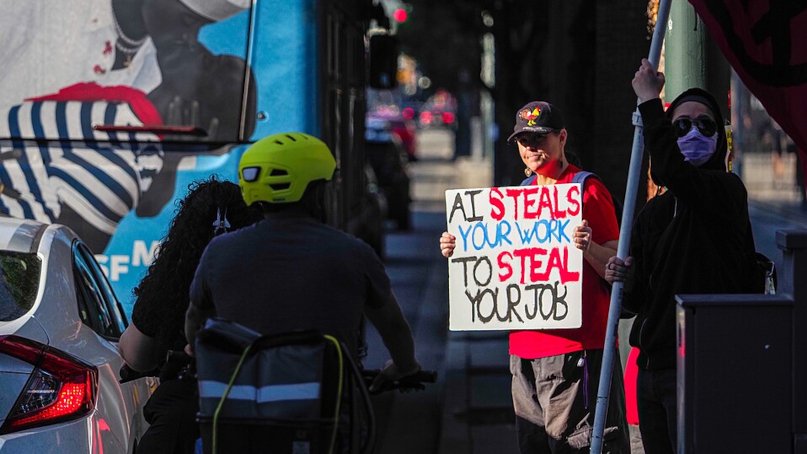
AI, the Nationwide Labor Relations Act, Wage and hour legal guidelines
It’s tough to disregard that AI is changing into a labor-law challenge and raises severe concern when it pertains to the appropriate to arrange. Part 7 of the Nationwide Labor Relations Act (NLRA) ensures private-sector workers the core proper to arrange, kind, or be part of labor unions, cut price collectively, and have interaction in different protected concerted actions for mutual assist or safety. This presents an necessary challenge: whether or not employers have an obligation to cut price with unions earlier than implementing AI programs that materially change workers’ working circumstances. Extra particularly, will employers cut price in good religion earlier than rolling out AI instruments that alter obligatory office topics like wages, hours, and each day working circumstances?
If an AI software adjustments how employees do their duties, shifts their hours, or impacts job security, the employer is required to speak to the union first. Even when the employer’s alternative to purchase software program is allowed, they nonetheless should cut price with the union over how the software program impacts the employees. A College of Chicago Legislation Overview on-line essay by Austin Smith, titled NLRA Protections for AI-Pushed Layoffs? describes intimately how unions just like the Culinary Union safe these rights.
One other instance is that if an employer intends to implement an AI software to look at employees, measure efficiency, or set quotas, prior negotiation is required. Introducing automation that results in fewer hours or job cuts triggers the responsibility to cut price over these results or selections. AI scheduling creates fascinating issues below the Truthful Labor Requirements Act (FLSA) and state wage legal guidelines. For instance, an algorithm may schedule workers in a method that creates unpaid preparation time, discourages workers from recording additional time, produces off-the-clock work, mechanically sends work-related communications exterior scheduled hours, or misclassifies employees.
It’s critical that employers don’t lose sight of the truth that know-how doesn’t change their underlying authorized obligation. An employer stays answerable for complying with wage and hour legal guidelines even when an algorithm administers the office.
AI and worker self-discipline
Now let’s think about an employer’s AI system determines that an worker has a “excessive chance of misconduct.” From solely this dedication, the employer terminates the worker. Naturally the worker desires to know why they have been fired, and the employer’s response is that the algorithm recognized them as a high-risk worker. This creates severe authorized and sensible issues. Workers in these conditions might want to know what conduct led to their termination, what proof was thought of, whether or not the data or proof was correct, whether or not the worker had a possibility to reply, and at last, whether or not protected traits influenced the choice to terminate. And if the AI data was mistaken, this data is necessary.
One of many greatest challenges would be the incapacity to elucidate some AI selections. Think about an algorithm rejects an applicant. The employer might know the end result however not be capable of clarify the rationale why the algorithm reached a no-hire determination. This might create battle with well-established employment legislation ideas similar to antagonistic employment actions, respectable nondiscriminatory causes, inadequate documentation, evidentiary burdens, worker discover, and judicial evaluation. In a litigation situation, the worker’s lawyer is prone to ask for coaching knowledge, prompts, weighting programs, validation research, audit outcomes, vendor contracts and data of human evaluation.
The employer’s use of outdoor distributors presents an necessary challenge concerning deniability. We are able to anticipate employers will argue that as a result of the AI system was developed by a third-party vendor, it’s accountable. This tactic is unlikely to remove the employer’s authorized obligations below employment legislation, however it does create rising allocation of danger issues.
New state and native AI legal guidelines
Apart from the federal authorities as a supply of regulation, states and municipalities are starting to control automated employment decision-making instruments. That is crucial as a result of an employer working nationwide might must adjust to completely different AI employment guidelines in several jurisdictions. Essentially the most consequential growth of AI within the office is that employment legislation is transferring from regulating solely human determination makers towards regulating these programs by way of which employment selections are made. Conventional employment legislation asks, “Did the employer discriminate?” However within the AI period, employment legislation asks, “What system did the employer use to make the choice, what knowledge skilled it, was the system validated, did it produce discriminatory outcomes, and did the employer train significant oversight?” Who bears accountability — the employer, worker, vendor or some mixture?
It isn’t unreasonable to imagine that by the point of this text being posted, AI may have penetrated deeper into the office and can proceed at alarming speeds. AI’s affect on the office is creating authorized points the legislation can not seemingly sustain with.
The opinions of the writer don’t essentially replicate the positions of the CPUSA.
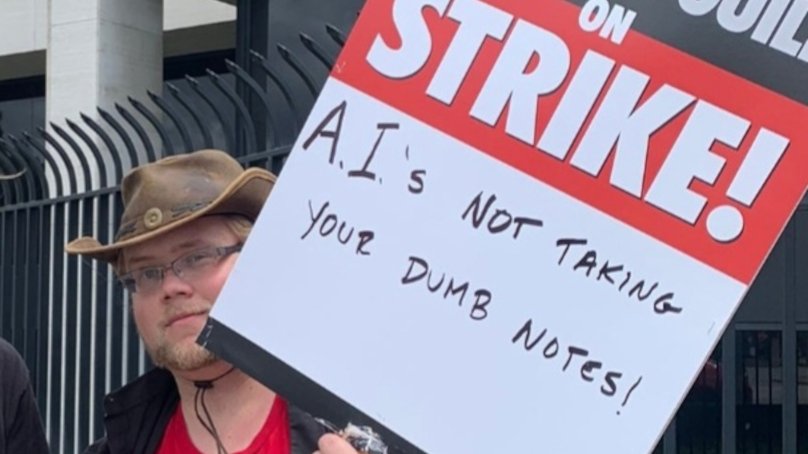
Picture: AI isn’t taking your notes by David James Henry. CC BY-SA 4.0. Cease AI protest sf 2025-09-26 010 by Anderseidesvik. CC BY-SA 4.0.