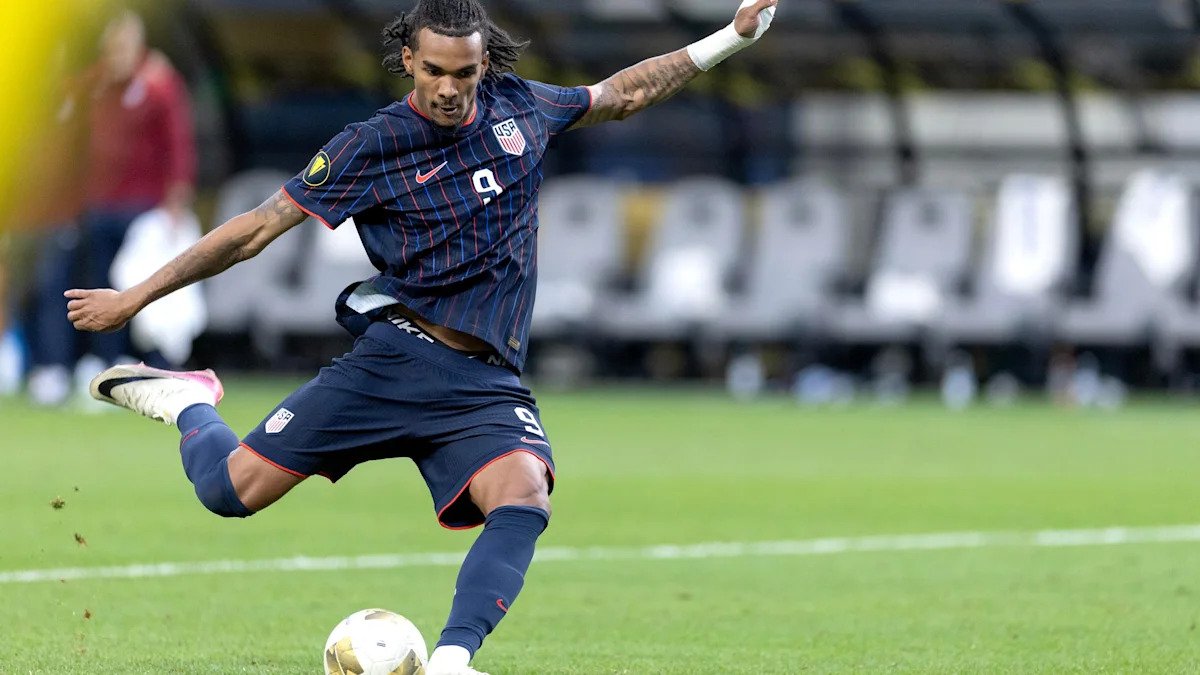
If 16-year-old Cavan Sullivan takes the sphere for the US males’s nationwide staff within the coming days, he’ll be part of a listing of youngest-ever US gamers that has no scarcity of recognizable names.
On the high is onetime phenom (turned cautionary story) Freddy Adu, nonetheless the youngest participant to ever seem for the US males. Names within the high 20 like Eddie Gaven and Bobby Convey will really feel acquainted to longtime US followers; Christian Pulisic, Yunus Musah and Gio Reyna are all nonetheless very a lot within the image and will nicely show to be Sullivan’s future companions in assault.
Just under Adu’s title and above these 5 talked about is a trio of names unknown to the overwhelming majority of US followers: Mike Slivinski, Mark Jonas and Nelson Vargas. All three gamers made their debut in a 1991 pleasant in opposition to Jamaica, with Slivinski and Jonas each youthful than Sullivan can be ought to he seem for the US this window. Solely Vargas featured for the US once more, capped a further 3 times between 1991 and 1994.
The concept of a 16-year-old representing the US on the senior stage has been mainstreamed by now, but it surely was extraordinary within the early Nineteen Nineties, lengthy earlier than the US Soccer Federation pumped tens of millions into youth growth and expertise identification. A lot in order that when Sullivan obtained his call-up final week, no one appeared to even bear in mind the three gamers who, greater than three a long time in the past, carved their names into the report books.
“A buddy of mine despatched me an article about [Cavan’s call-up], and it stated he’d be the second-youngest participant in US historical past,” says Slivinski, breaking into laughter. “What am I, a fucking ghost? I don’t suppose it was a dream, I’m fairly positive I didn’t think about the one sport I performed.”
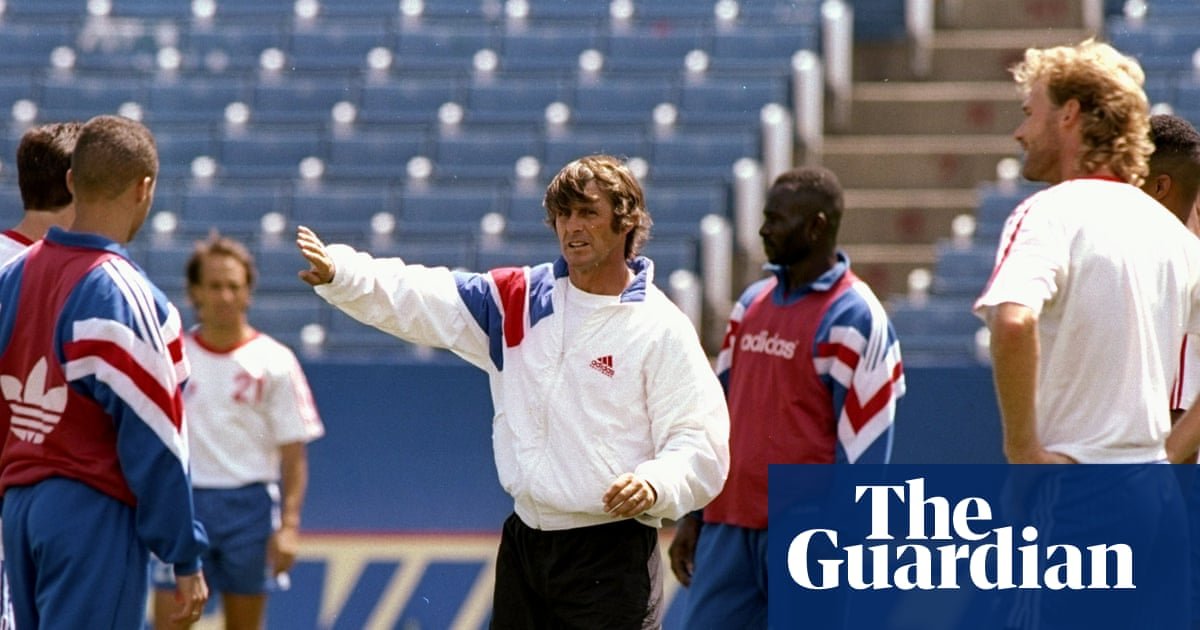
When Bora Milutinovic took the reins as US head coach in 1991, he inherited a program approaching probably the most pivotal second in its historical past. A yr earlier, the US had appeared of their first World Cup in 4 a long time. In three years, the nation would host the event for the primary time. It was crucial, then, that the USMNT put in an honest displaying on dwelling soil.
Milutinovic took a protracted, wandering path to the USMNT, with stops as a participant or coach in a dozen or so completely different nations. He led Mexico on the 1986 World Cup and Costa Rica in 1990, guiding either side to their then-best-ever finishes. His fame as a little bit of a miracle employee – a specialist extracting outcomes out of underperforming groups – was an ideal match for a US aspect who lacked little in the way in which of grit however nonetheless missed the standard to compete with the world’s finest.
In brief order, Milutinovic set out on a expertise identification journey that was unprecedented on the time, calling lots of of gamers into various camps and handing almost 50 of them their first caps in his three years on the helm.
In August 1991, that scouting journey took Milutinovic to the U-17 World Cup in Italy. There, an unheralded group of US children bossed an Italy squad that includes Alessandro Del Piero and an Argentina staff led by Marcelo Gallardo and Juan Sebastián Verón. The US could be undone by Qatar within the quarter-finals, however a number of gamers had managed to depart their mark on Milutinovic and his employees.
Amongst them was Slivinski, who’d grown up in a trailer park in St Charles, Missouri, throughout the river from St Louis. Lengthy earlier than the period of MLS Subsequent Professional or elite youth journey groups that typically resemble skilled golf equipment, Slivinski honed his abilities at his native highschool, finally incomes a glance from US Soccer.
“These Italy gamers from that U-17 World Cup left and went again to coaching with Fiorentina,” Slivinski says, laughing. “I left that event and went proper again to coaching with Francis Howell North [high school].”
Slivinski’s accomplice in midfield, Vargas, additionally caught Milutinovic’s eye. Vargas’s footballing journey in some methods mirrors that of US legend Clint Dempsey, whose skillset and mentality was tempered taking part in within the Mexican males’s leagues of his dwelling city. Raised by a Colombian father, Vargas was that includes in Miami’s highly-competitive Sunday leagues at age 13, usually lining up in opposition to ex-professional gamers twice his age and dimension.
“Should you’re ok,” Vargas says now, “you’re sufficiently old.”
Like Slivinski, Jonas was 16 on the time and in addition performed for his highschool staff. His profile, although, was tremendously boosted by his presence on an elite membership aspect in Maryland, a hotbed that had produced a number of members of the 1990 World Cup squad. Jonas was a participant within the federation’s Olympic Developmental Program, on the time the one true pathway for a youth participant to remain on the radar of the senior nationwide staff.
The three arrived in North Carolina three days earlier than the USMNT’s 14 September pleasant in opposition to Jamaica and joined a mixture of different newcomers and regulars. The three excessive schoolers joined up with US staples resembling Paul Caligiuri, Fernando Clavijo and Hugo Pérez.
“Simply being round among the guys from the complete staff, it was unbelievable,” Jonas says. “Chris Henderson was there. I bear in mind Clavijo left an enormous impression on me, he was a really hard-nosed participant. It was loopy to see how all the pieces translated; I used to be a child and that was the primary time I had ever performed in opposition to full-grown males, the pace of all the pieces.”
“Time and area,” Vargas says, “turns into quite a bit tougher to handle with grown males, should you’re not used to it. The whole lot occurs quite a bit quicker.”
There isn’t any video of the match – there by no means was, as most US friendlies weren’t extensively broadcast. When requested, not one of the three even had a photograph of their time with the senior staff. However by most accounts Slivinski, who had been handed a shock begin, acquitted himself nicely. The US took a first-half lead on a objective by indoor and out of doors soccer journeyman Sadri Gjonbalaj. Not lengthy after, Slivinski made his mark, drawing a foul about 25 yards from objective and coming very near changing it on the following free kick. Then got here a breakaway and a shot throughout the face of objective which as soon as once more challenged Jamaica’s keeper.
“This expertise is indescribable,” Slivinski informed the native paper after the match. “It’s only a huge honor. I’m thrilled, nervous and just a little speechless, actually.”
Vargas and Jonas entered the match within the second half, doing sufficient to attract reward from Caligiuri and Milutinovic. The event, although, appeared solely misplaced on the press; soccer-specific publications like Soccer America famous the truth that Slivinski had change into the youngest-ever US males’s participant (Mia Hamm debuted for the ladies at age 15 in 1987), however newspapers by no means made point out of the actual fact.
after publication promotion
“If it will have occurred as we speak, it will have been a giant deal,” says Vargas. “However soccer within the US simply wasn’t what it’s now, in any respect, there was no social media or protection again then. However that’s what it’s.”
The eye isn’t the one factor that eluded the trio of kids after their debut, which for Jonas and Slivinski served as their lone appearances with the US.
“I saved my jersey on after the match, I wore it again to the lodge soaking moist,” says Slivinski. “Pondering perhaps they’d let me maintain it. However that reveals you the way completely different a time it was – [US Soccer] most likely didn’t have the cash to do this.”
All three US debutants had goals of future call-ups, of perhaps even making the 1994 World Cup squad. For Slivinski and Jonas, these goals proved fruitless; accidents derailed Slivinski’s nationwide staff ambitions, although he’d go on to win an NCAA championship on the College of Virginia and MLS Cup with DC United earlier than hanging up his cleats in 2000. He by no means performed with the nationwide staff once more.
“Accidents, I suppose, did me in,” Slivinski says. “However I additionally didn’t attempt laborious sufficient, I don’t suppose. Mentally, I simply wasn’t there.”
Jonas, too, confronted his personal frustrations. In 1992, he departed for North Carolina State, the place he’d earned an athletic scholarship. It appeared an honest transfer on the time, however he shortly discovered himself with a university coach hesitant to launch him to attend youth nationwide staff camps. Rapidly, Jonas disappeared from Milutinovic’s radar and disappeared into the wild world of late-’90s US minor league soccer, that includes for the likes of the Cleveland Crunch, Philadelphia KiXX and Virginia Seashore Mariners.
“It was irritating,” Jonas says. “A complete grind. There have been guys that had been youthful than me in school that I used to be undoubtedly higher than – they acquired extra alternatives than I did simply due to their age and the way in which the panorama modified. After the nationwide staff, should you weren’t getting referred to as up any extra then you definately had been basically by yourself. I bear in mind cold-calling coaches making an attempt to get tryouts, groups had been folding yearly. It was simply evening and day to what it’s now.”
Vargas would go three years earlier than pulling on the US shirt once more, finally that includes in a trio of late-1994 friendlies simply earlier than Milutinovic was pressured out as US boss. Vargas remembers incoming head coach Steve Sampson warmly, however Sampson by no means gave him a glance. He’d get another likelihood, although, to signify the US, that includes for the Olympic staff on the 1996 Video games in Atlanta. Vargas did handle an honest run in MLS, that includes for the Miami Fusion and Tampa Bay Mutiny, each of whom folded not lengthy after Vargas retired in 2000.
Vargas did hit the pitch as soon as extra, although: he performed former USMNT participant John Souza in The Recreation of Their Lives, the movie dramatization of the US’s shock victory over England on the 1950 World Cup.
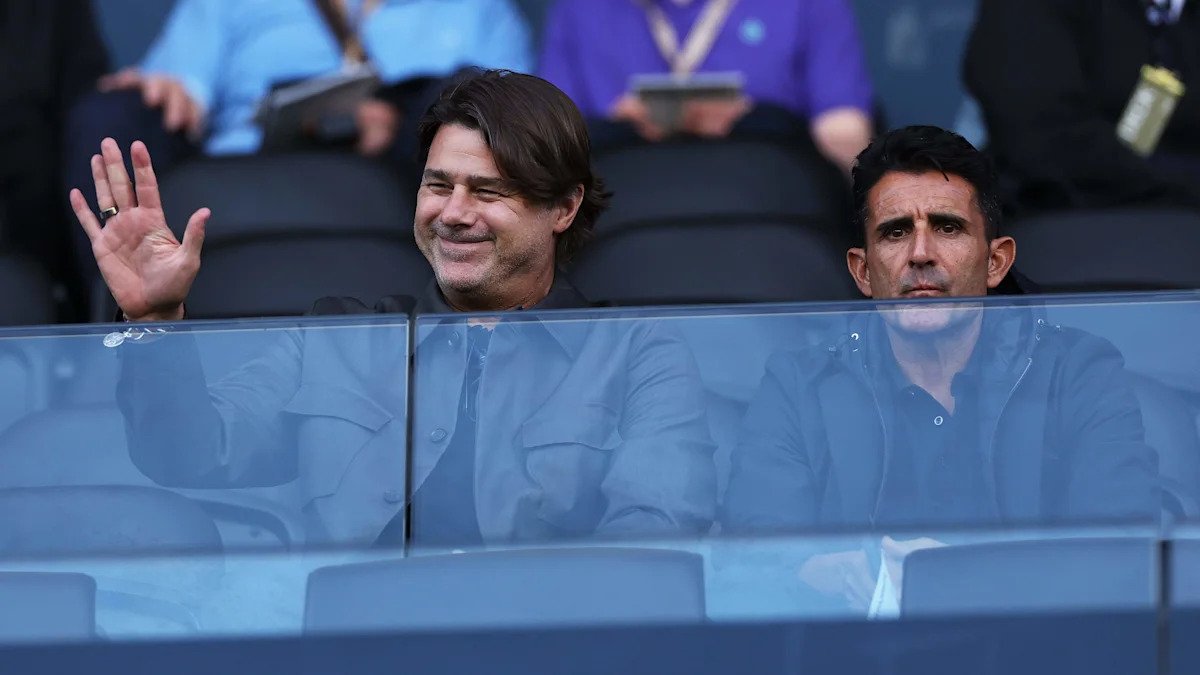
All three have since transitioned into youth teaching, maybe providing them some distinctive perception into the potential destiny of Sullivan and the opposite youngsters on Mauricio Pochettino’s roster for this worldwide window. Evaluating the setting these children got here up in with the one they navigated, although, proves tough.
“After I was Cavan’s age, that was 35 years in the past,” Jonas says. “It’s good to see issues altering. I’m teaching in MLS Subsequent proper now; these groups are handled like nationwide groups, virtually. There’s residency, all of their bills are taken care of, they journey in buses and planes and so they’re flying collectively, sporting the identical stuff. It’s insane, it’s nothing like what we got here up in. There was simply no actual help again then.”
“It’s nice that these children get these alternatives,” Vargas provides. “This child Cavan, he has all of the instruments. Why not let him take a look at himself in opposition to the very best gamers, the older gamers? The one method you discover ways to take care of the hearth typically is to get thrown into it.”