American voters are more and more prepared for multi-party democracy. The share of voters figuring out as independents is close to a historic excessive, significantly amongst youthful People. The Democratic and Republican events are beneath pressure from inner ideological divisions, and survey information constantly exhibits voter curiosity in new choices.
Regardless of these indicators of readiness from voters, we lack readiness institutionally – for instance, many states have guidelines that discourage minor-party participation – and politically, with ingrained opposition from celebration elites and policymakers. A path towards multi-party democracy is dependent upon bridging this hole.
This piece discusses a imaginative and prescient of “two-and-a-half celebration” multi-party democracy that might work for the USA, after which goals to chart a path towards it.
A lot of at the moment’s frustration with politics stems from an absence of democratic responsiveness. Congress typically fails to behave on points that matter, even when there may be broad public help for change. One main purpose: Neither celebration feels electorally threatened in its personal strongholds. If Democrats or Republicans fail to ship for voters, they’ll nonetheless preserve their seats attributable to a mix of gerrymandering and lack of competitors.
Responsiveness is the important thing worth by which we must always decide whether or not a democratic system is working. A system works properly when voters can shift their help and meaningfully affect electoral and governing outcomes. In a transfer towards multi-party democracy, the important thing query shouldn’t be what number of events we must always have, however somewhat what circumstances will make events aware of voters and signify voters’ pursuits.
Proportional illustration (PR) methods create or incentivize multi-party democracy by appearing like a strain valve. When voters can credibly defect to various events with out “losing” their vote, main events face actual electoral penalties for inaction and are pressured to adapt.
Two American establishments complicate our transition to full multi-party democracy: the presidency and the Senate. Each depend on high-profile, winner-take-all elections that naturally collapse into two-candidate contests. Given the issue of constitutional change, we anticipate they’ll stay largely intact. Their continued significance — together with the nationwide fundraising and organizing equipment constructed round them — will reinforce the dominance of two main events.
Given these challenges, there are causes to be skeptical that we are going to obtain a completely fragmented multi-party system. A extra believable consequence – and the extra related one for enhancing responsiveness – could also be a system that permits extra events or factions to compete meaningfully alongside the 2 dominant ones.
Political scientists have lengthy acknowledged a center floor between two-party and absolutely multi-party methods: the “two-and-a-half celebration system,” that includes two dominant events alongside smaller ones that always play a pivotal position in coalition governments. Many nations have match this mannequin at varied factors, together with PR nations like Germany and Australia, and non-PR nations like Canada. What they’ve in frequent is extra responsive policymaking. If the key events fail to ship for voters, new events can come up and seize vote share.
One current instance is the Australian Inexperienced Celebration. Australia’s political system revolves round two main blocs – Labor and the Liberal-Nationwide coalition – however smaller events and independents recurrently win illustration. The Australian Greens, as an illustration, gained sufficient Senate seats in 2010 to demand passage of a landmark local weather regulation as the worth of help for the coalition authorities.
This “strain valve” is the important thing good thing about multipartyism, and might perform even with a restricted variety of events. When voters have credible alternate options, events should reply or danger shedding help. The purpose shouldn’t be to maximise the variety of events, however to make sure the system permits for adaptation. A system with many events dangers fragmentation and instability. The “two-and-a-half celebration” system mitigates these dangers by sustaining massive anchor events, whereas permitting for significant competitors. We hypothesize {that a} “two-and-a-half-party” system is extra believable for the USA than a full multiparty system.
We are going to want a mixture of structural options and cultural shifts to maneuver towards a two-and-a-half celebration system. On the structural facet, PR in multi-member districts is an important piece. PR would enable for elevated competitors and higher illustration for numerous communities. However PR alone shouldn’t be sufficient.
Congress would additionally have to perform otherwise. Within the close to time period, re-empowering congressional committees and increasing alternatives for members to bypass management to convey laws to the ground may assist.
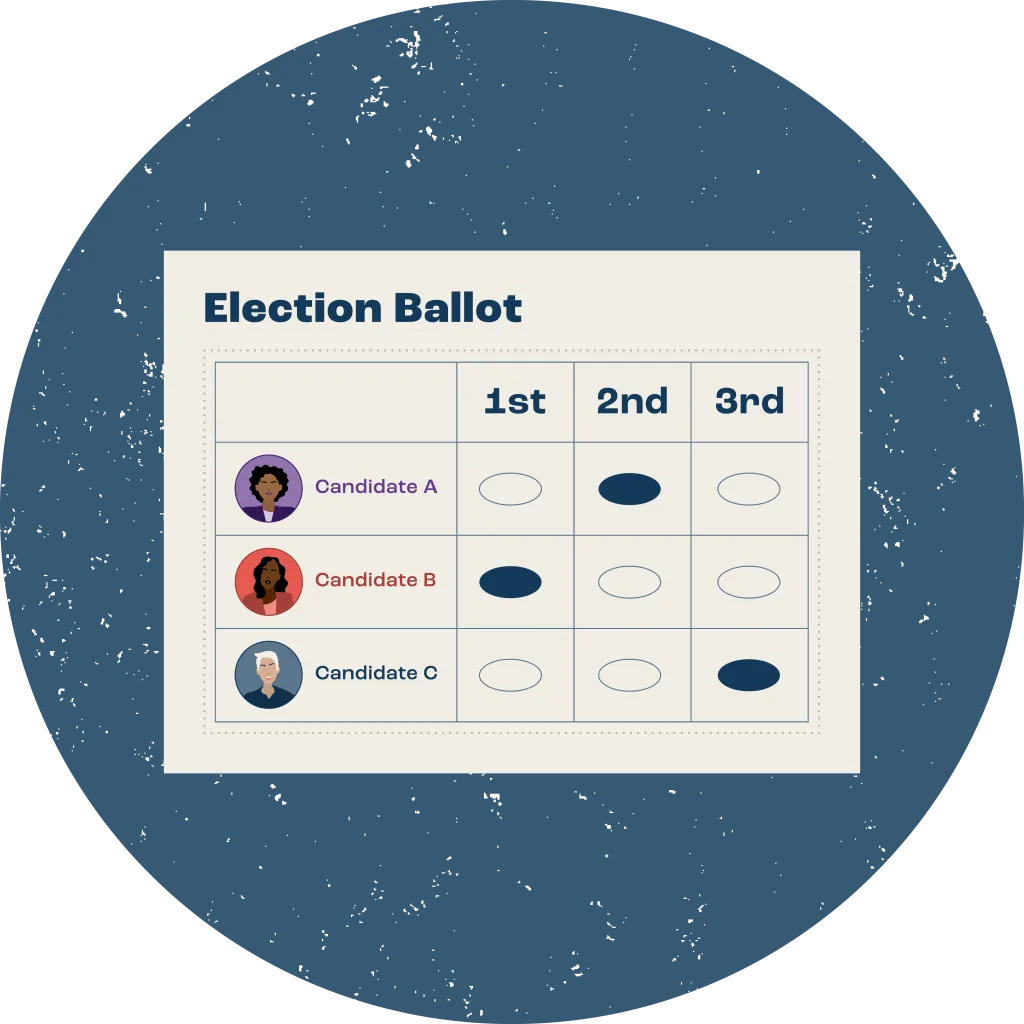
On the state degree, one focus ought to be the adoption of affordable poll entry legal guidelines that enable new events and unbiased candidates to construct energy and compete. Ranked selection voting (RCV) also can assist. In Alaska, RCV has sustained a viable pathway for independents, led to a bipartisan governing coalition within the state legislature, and guarded aisle-crossing politicians like Senator Lisa Murkowski.
A few of these reforms could not appear strictly essential to the long-term purpose of a number of wholesome events and coalition authorities. However the street from right here to there necessitates breaking structural gridlock, and empowering elected leaders to prioritize responsiveness to voters.
Cultural shifts are additionally vital, and events want to search out new methods to get residents engaged within the face of our long-term decline in civic participation. Each establishments and cultural norms evolve regularly. But, over time, structural reforms and cultural change can reinforce one another. Publicity to extra aggressive elections, viable various events, and coalition-style governance – even at native or state ranges – can assist normalize these practices.
A disaster second can speed up change, or put concepts onto the desk that may have appeared far-fetched in additional regular instances. However ready for a disaster shouldn’t be a method. The reforms mentioned right here – modernizing Congress, increasing poll entry, and adopting PR and RCV in localities and states – are concrete steps we will take at the moment towards PR and multipartyism that may construct capability and familiarity.
For institutional causes, the USA could not leap to a completely fragmented multi-party system, although it could not want one to understand the advantages of multipartyism – wherein voters have actual selections, and events are really aware of voter preferences.
Acknowledgements
This paper was initially written for the 2026 Deliberation and Competitors – Pathways for Renewing Democratic Participation convention hosted by the Ash Heart and Columbia World Initiatives. It has been flippantly edited for publication.