Up to date Sept. 28, 2026, 10:54 p.m. ET
WASHINGTON — A serious bipartisan invoice to overtake school athletics nationwide handed the Senate, clearing a key hurdle and organising a doubtlessly divisive political showdown within the Home of Representatives.
The chamber handed the Defend School Sports activities Act, which goals to rein in compensation for student-athletes and place new limits on transfers, on Monday, Sept. 28. The vote was 77-22.
The success of the measure — arguably the most vital piece of laws the Senate will cross earlier than recessing till the midterms — marked a second of serious progress for a yearslong push by lawmakers to intervene in school sports activities regulation.
Sen. Ted Cruz, the invoice’s important Republican architect alongside Sen. Maria Cantwell, D-Washington, advised USA TODAY Sports activities earlier than it handed that it could assist curb a “spending spiral the place nearly each athletic division is shedding thousands and thousands of {dollars}.”

“Crucial a part of the invoice is bringing order to chaos,” mentioned Cruz, the chairman of the Senate Commerce Committee. “School sports activities is the Wild West. There are basically no guidelines.”
But only a month earlier than the autumn elections, the invoice is inflaming stark divisions amongst congressional Democrats, a lot of whom have been beneath stress from civil rights and labor leaders to dam it amid criticism it could disempower student-athletes, primarily these of colour.
In a prolonged speech on the Senate flooring earlier than the laws handed, Sen. Cory Booker, D-New Jersey, himself a former school athlete, known as it a “invoice that is going to harm so many.”
“I remorse at the present time,” he mentioned. “I remorse watching my colleagues do that.”
Limits on NIL, transfers

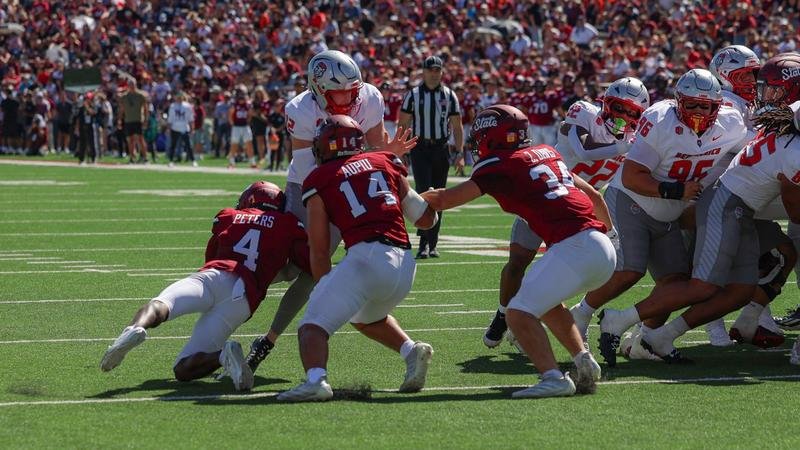
In recent times, court docket choices in favor of athletes’ rights have allowed college students to massively revenue from their fame, sometimes called “title, picture and likeness,” or NIL. In critics’ eyes, these adjustments have plunged universities’ funds into disarray, closed athletic packages and created inequities amongst rich and less-affluent colleges.
“Litigation has struck down nearly all the foundations, and consequently, you could have athletes going into the switch portal two, three, 4 instances,” Cruz mentioned. “If Congress does not act inside a couple of years, we are going to see tons of of 1000’s of roster slots and scholarship positions going away, and that may be a tragedy.”
The Senate-passed invoice would codify a federal proper to NIL for student-athletes. It additionally would handle the present panorama of limitless transfers, quickly pause convention realignment and create tips round which period a school soccer or basketball coach may be employed away from one other program.
As well as, the measure would increase revenue-sharing from colleges to athletes as much as roughly $43 to $45 million. And it comprises a provision the place colleges might spend as much as an extra $5 million on revenue-sharing to ladies’s and Olympic non-revenue sports activities.
Sen. Eric Schmitt, R-Missouri, advised USA TODAY Sports activities the laws would deliver stability, each for athletic conferences and gamers.

“I feel we did a reasonably good job of balancing all of the competing pursuits,” Schmitt mentioned.
Opponents of the invoice, most vocally led by Sens. Booker and Chris Murphy, D-Connecticut, have argued it could solely cap spending within the type of revenue-sharing to student-athletes and wouldn’t handle multimillion greenback teaching contracts and buyouts. Additionally they cite that the invoice wouldn’t handle collective bargaining issues and does not embody a provision to make athletes staff of their respective establishments.
“At its core, it is a invoice that undermines the rights of younger individuals who pour their blood, sweat, tears, numerous hours of labor and extra into their craft,” Booker mentioned. “We must always’ve listened to their knowledge earlier than voting at the moment, earlier than speeding to this vote as the very last thing we do earlier than a protracted recess.”
In a press release Monday night time, Charlie Baker, the NCAA president, applauded what he known as a “bipartisan effort to guard this uniquely American custom of school sports activities within the a long time to return.” “There’s a lot work left to do to make sure student-athlete advantages are codified into federal regulation,” he mentioned.
What now?
To turn into regulation, the Defend School Sports activities Act now has to cross the Home with a easy majority vote. Ought to the invoice survive that course of, it could be moved to the desk of President Trump, who has signaled he would signal it.
The Home, nonetheless, is recessed till after the midterm elections in early November. On Monday, Cruz known as on Republican Home Speaker Mike Johnson to right away deliver lawmakers again to cross the invoice.
“The Home can cross the invoice in simply sooner or later. In contrast to the Senate, the Home can transfer in a short time,” he advised USA TODAY Sports activities. “I’ve already urged President Trump to signal the invoice on the set of (ESPN’s) ‘School GameDay’ at a giant sport this fall. However it’s my hope and perception that this invoice shall be signed into regulation earlier than election day.”
With many Republicans glued to the marketing campaign path, although, getting lawmakers to abruptly return to Washington could be a tricky promote.
How did the Defend School Sports activities Act cross the Senate?
The Defend School Sports activities Act first cleared the Senate Commerce Committee on June 18 with a 19-9 vote. It then superior to the complete Senate. After senators accepted cloture by a 74-24 margin, they unveiled a collection of adjustments on Sept. 17, together with:
- NCAA-led compliance oversight: One modification required the NCAA to supervise compliance efforts on member campuses to make sure colleges adhere to the invoice’s well being, wellness and security requirements. Supporters say the change provides an impartial layer of oversight and reduces the danger of faculties circumventing the regulation’s reporting necessities and enforcement construction.
- Decreasing the conference-transition restriction from 5 years to 3: One of many invoice’s central objectives is to guard packages outdoors the Energy 4 from being left behind throughout future rounds of convention realignment. The supply would require colleges altering Energy 4 conferences to stay impartial athletics entities for 3 years as an alternative of the initially proposed 5. The revision was considered as key to gaining help from senators in states reminiscent of Florida and South Carolina, the place issues had been raised in regards to the longer timeline.
- Increasing medical protection protections for athletes: This modification establishes a minimal commonplace for medical protection whereas eliminating language that would have been interpreted as capping institutional legal responsibility. Earlier variations of the invoice restricted the quantity colleges could possibly be held financially accountable for in medical bills. The revised language units a flooring for protection with out imposing a ceiling.
- Connecting extra revenue-sharing alternatives to educational efficiency: Below the modification, colleges could be required to put extra revenue-sharing funds right into a retention pool tied to educational benchmarks, together with commencement charges and Educational Progress Fee (APR) requirements. Supporters argue the change encourages athletes to proceed making progress towards a level, even in an period more and more outlined by switch motion and roster turnover.
With the Home unlikely to return to session earlier than the midterms, the Defend School Sports activities Act is not anticipated to see extra legislative motion till later this 12 months.