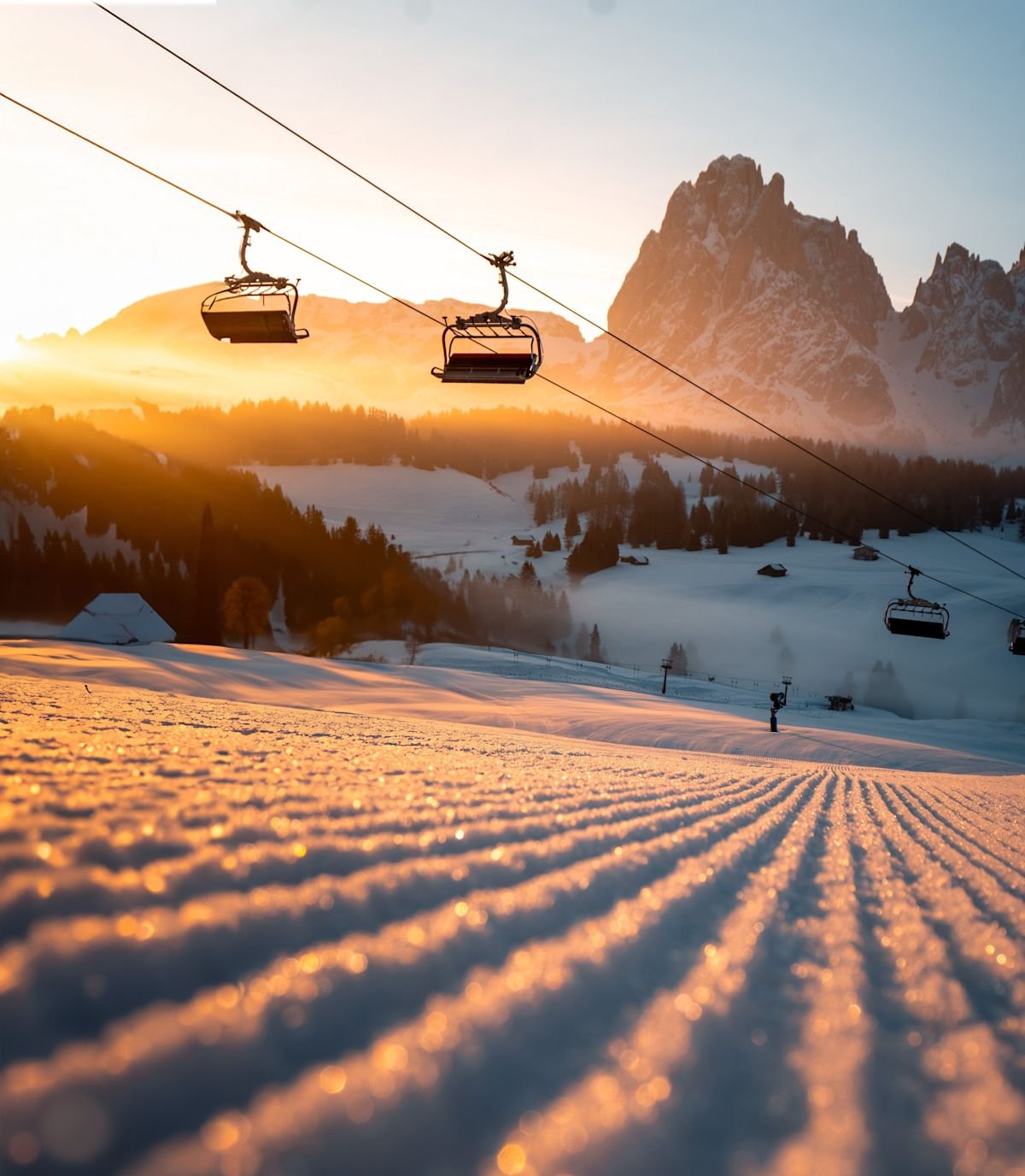
The debate over daylight saving time has gained an unlikely opponent: ski resorts.
As Congress considers laws that may make daylight saving time everlasting, ski resort operators throughout the nation are urging senators to reject the plan. They argue that darker winter mornings would create security dangers for employees, delay ski raise openings and damage mountain communities that rely upon winter tourism.
The push comes as President Donald Trump and supporters of the Sunshine Safety Act proceed to advocate ending the twice-yearly clock change. The Home has already accepted the measure, but it surely nonetheless faces a Senate vote earlier than it will probably turn out to be regulation.
A younger male skier stands on the skis, watching a sundown.
For ski resorts, the priority is not shedding daylight within the night. It is shedding it earlier than the workday even begins.
In a Sept. 10 letter shared with USA TODAY, a coalition representing 115 ski areas in 10 states warned senators that everlasting daylight saving time might push winter sunrises previous 8 a.m. in components of the Mountain West and New England. That, they argue, would drive employees to arrange slopes at nighttime, create security issues and doubtlessly delay ski operations.
Why are ski resorts against everlasting daylight saving time?
Resort operators say everlasting daylight saving time would have an effect on ski areas in two main methods: employee security and day by day operations.
Many staff, together with ski patrollers, raise mechanics, snowmakers and groomers, start work hours earlier than lifts open to the general public. Resort teams argue that darker winter mornings would drive these staff to carry out vital duties in low-light circumstances, rising security dangers.
In addition they say ski areas can’t safely open till crews full inspections and different preparations that always require daylight.
If resorts needed to wait longer for dawn, operators contend, opening instances could possibly be pushed again, decreasing working hours throughout peak ski season and affecting close by lodges, eating places and different companies that rely upon mountain tourism.
Why not simply open later?
Resort teams say shifting working hours just isn’t so simple as transferring the schedule.
In response to the letter, morning daylight is important for duties equivalent to avalanche mitigation, raise inspections and path preparation. Shifting these actions later into the day might create new operational challenges whereas shortening the prime hours that many skiers want.
Operators additionally argue that ski areas are tied to a broader community of colleges, baby care schedules, transit methods and transportation businesses, making large-scale schedule modifications tough.
Ski resorts aren’t the one critics
Some non secular teams have additionally raised issues about everlasting daylight saving time.
Orthodox Jewish leaders have argued that later winter sunrises might complicate prayer schedules which are tied to dawn and sundown. Some Muslim communities have expressed related issues as a result of sure day by day prayers should be accomplished by daybreak.
What would the Sunshine Safety Act do?
The Sunshine Safety Act would make daylight saving time everlasting nationwide, eliminating the necessity to change clocks twice a 12 months.
Supporters, together with Trump, argue the change would present extra night daylight, scale back disruption from clock modifications and simplify day by day life for People.
Opponents counter that everlasting daylight saving time might result in very darkish winter mornings, significantly in northern states, elevating issues about security, well being and day by day routines.
When does daylight saving time finish in 2026?
Except Congress acts, daylight saving time will finish at 2 a.m. native time on Sunday, Nov. 1, 2026, when clocks are set again one hour.
Meaning People will achieve an additional hour of sleep, however sunsets will arrive earlier all through the winter months.
Why the talk is not ending anytime quickly
Whereas polls constantly present many People need to finish the twice-yearly clock modifications, there’s far much less settlement on what ought to substitute them.
Some favor everlasting daylight saving time for brighter evenings. Others, together with many sleep researchers, want everlasting customary time as a result of it extra intently aligns with the physique’s pure circadian rhythm.
That divide has left lawmakers balancing competing issues from companies, well being consultants, non secular teams and now the ski business as the talk over the nation’s clocks heads again to Congress.
Contributing: Reuters; Bart Jensen, Zachary Schermele, Jorge L. Ortiz, Fernando Cervantes Jr., Emily DeLetter, Julia Gomez, Kinsey Crowley, Marc Ramirez / USA TODAY
Saman Shafiq is a trending information reporter for USA TODAY. Attain her at sshafiq@usatodayco.com and observe her on X and Instagram @saman_shafiq7.
This text initially appeared on USA TODAY: Ski resorts push again on Trump’s time change plan