Maritza Baptiste, Workers Author
This previous summer season, many people tuned in to the fact tv sequence “Love Island USA.” On this present, contestants are taken to a villa in Fiji to hopefully discover love and win the $100,000 money prize.
The present not solely attracts followers in with its heightened drama, however attracts a second following on social media with viewers and non-viewers reposting clips, sharing memes and posting opinion commentary on the dynamics between contestants.
“Love Island USA” has grown far past only a summertime actuality TV spectacle — its cultural relevance and distinctive perspective on fashionable courting make it a case research on our era in all of its provocative and problematic glory.
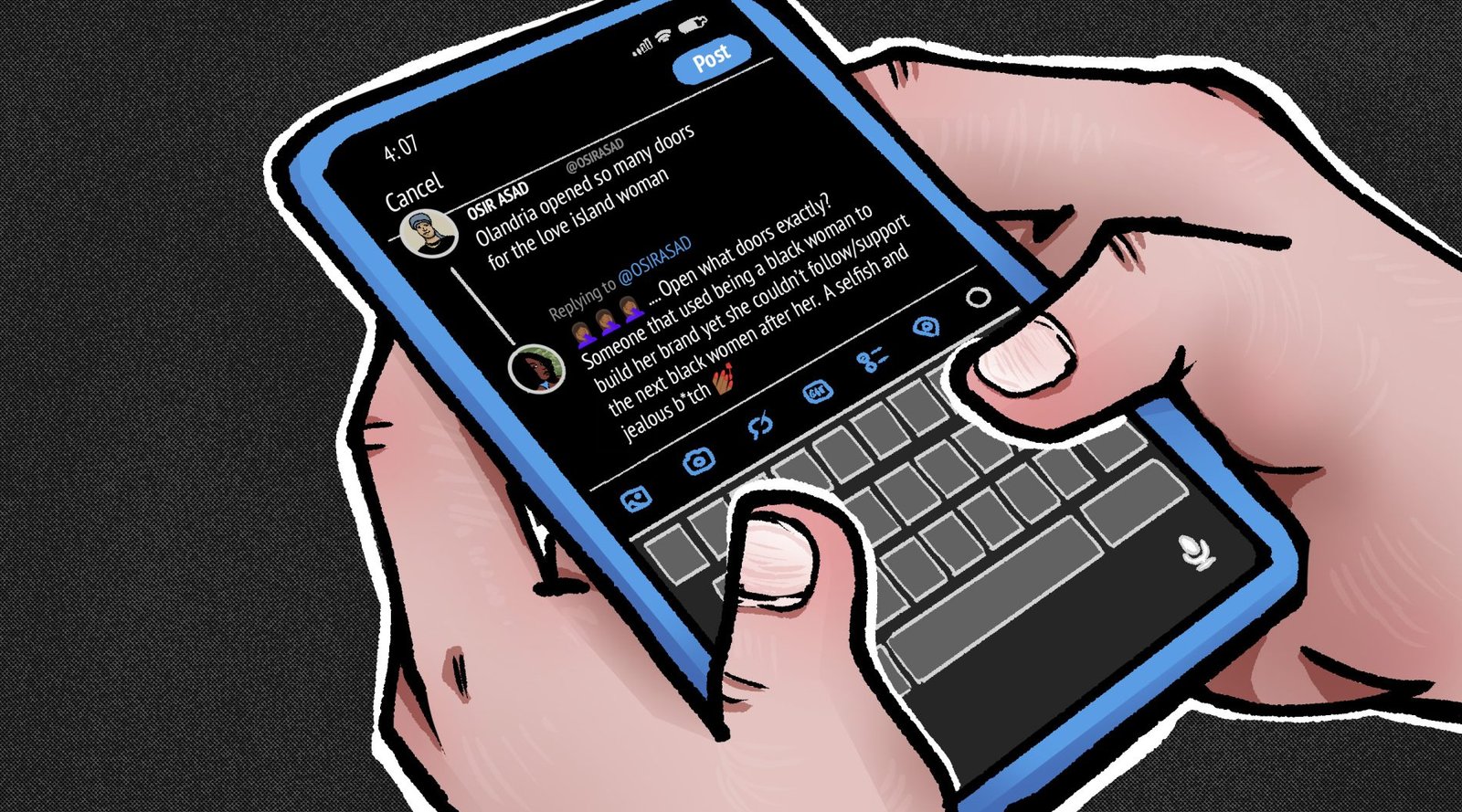
The newest season of “Love Island USA” was the primary to characteristic a forged of all Black feminine finalists. This season’s illustration meant loads for the present’s Black fanbase and that assist was proven via the cultivation of fan accounts and fandom areas, primarily on the platform X, previously generally known as Twitter.
Fan accounts would characteristic a profile image with the face of their favored contestant and the proprietor(s) would put up content material that includes mentioned Islander. These accounts constructed communities round Black feminine contestants and created communal areas the place followers may really feel secure posting and reacting amongst their friends.
This seemingly lovely show of collectivity fell as quickly because it was revealed that the homeowners of those accounts have been predominantly white or non-Black.
Digital blackface just isn’t a brand new conference. Blackface originates from minstrel exhibits the place stereotypes of Black folks have been exaggerated as satire.
In line with the Nationwide Museum of African American Historical past & Tradition, “By distorting the options and tradition of African People[…]white People have been capable of codify whiteness throughout class and geopolitical traces as its antithesis.”
Most just lately, we’ve got seen minstrelsy mirrored within the halloween costume that the key retailer Goal had on the market. This comes after Goal’s determination final 12 months to roll again DEI initiatives which resulted in main boycotts and a major lower of their inventory worth.
Digital blackface nonetheless, doesn’t essentially contain somebody bodily altering their look or claiming to be Black, however it’s nonetheless the net appropriation and efficiency of an identification that’s not their very own.
What is especially dangerous to Black followers of “Love Island USA” is how our group, our voices and our likenesses are continuously used as satire, even when it’s our ache being placed on show. Significantly, Islanders like Melanie Moreno, Aniya Harvey and KC Chandler’s reactions in usually painful or humiliating conditions have been closely circulated on-line as ‘jokes.’ When these ‘jokes’ are delivered by way of an account with a Black profile picture, we fall sufferer to modern-day minstrelsy.
Stereotypes work by decreasing a person all the way down to a single, recognizable attribute. Digital blackface operates equally.
We must be allowed to be humorous with out being caricatures. We must be allowed to be emotional with out turning into response photos.
We must be afforded illustration with out then turning into the costume in your on-line persona, whether or not that costuming is intentional or not.
Loving Black tradition and laughing at our jokes doesn’t make you Black.
A profile image and a well-cultivated on-line house doesn’t make you perceive Black historical past or our group.
The unstated actuality of being Black means white ‘appreciation’ all the time comes with appropriation. We’re by no means the vessels for our personal tales.