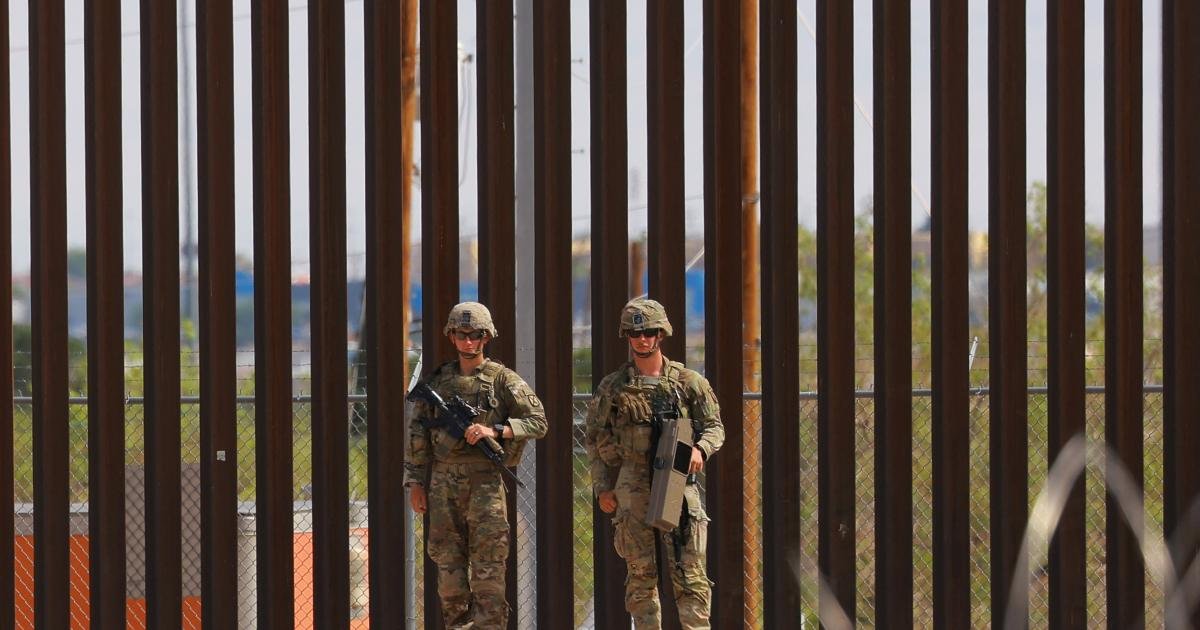
Amongst its many benefits, the US advantages from a uncommon type of geographic luck: it’s bracketed on the east and west by two huge moats within the Atlantic and Pacific Oceans and solely two neighbors to the north and south, each of whom are comparatively pleasant. Including to this luck is that, because the finish of World Warfare II, the US has possessed a strong nuclear arsenal and unparalleled navy, financial, and technological may. Regardless of the 9/11 terrorist assaults, this mixture of geography, deterrence, and energy has led many Individuals to really feel virtually untouchable at house. In keeping with a 2024 Chicago Council on World Affairs ballot, simply 19 p.c of these surveyed expressed concern about overseas threats.
It’s time for Individuals to revise their assumptions. The truth is, the U.S. homeland has by no means been as weak to assault as it’s at the moment. China, Russia, and North Korea are build up their typical and nuclear capabilities to strike the US throughout quite a lot of domains—and U.S. defenses haven’t stored tempo. A significant evolution in know-how and ways, in the meantime, has elevated the specter of subversion and gray-zone assaults: drones from state and nonstate actors can strike virtually any goal in the US, and adversaries comparable to China can conduct AI-enabled offensive cyber-operations that may destroy or harm important infrastructure.
The US is just not ready. The nation’s air and missile defenses are porous. Arcane home legal guidelines and insurance policies forestall the mandatory coordinationand authority to defend towards drone assaults. And power, water, monetary, health-care, and different infrastructure stay weak to superior cyberattacks. Confronted with these new threats, federal, state, and native entities in the US are caught flat-footed. The 9/11 assaults occurred partly due to policymakers’ lack of ability to understand that the world was altering and to share info throughout authorities businesses that might have protected the nation. With out an overhaul of the nation’s homeland safety equipment, Washington is at risk of creating this error once more.
MISSILES OVER THE MOAT
Safety measures enacted after September 11 had been designed to guard the U.S. homeland from terrorism. The usA. Patriot Act and subsequent laws enabled U.S. businesses to gather extra intelligence at house and overseas. The Division of Homeland Safety, Workplace of the Director of Nationwide Intelligence, Nationwide Counterterrorism Middle, and Joint Terrorism Activity Forces had been created or enhanced to raised share intelligence about terrorism and different threats. The FBI considerably expanded the variety of Joint Terrorism Activity Forces throughout the nation, coordinated with state and native legislation enforcement, and performed intelligence-led operations to establish and arrest terrorists.
These measures had been useful on the time, when terrorism was the most important menace to the U.S. homeland. And so they had been profitable in stopping the overwhelming majority of terrorist plots within the homeland. However at the moment, a few of the biggest threats to the US come from state actors. China, Russia, and North Korea all possess intercontinental missiles able to hitting the U.S. homeland—and all have performed checks and workout routines to indicate that they’re able to utilizing them.
The wars in Iran and Ukraine counsel that possessing a nuclear arsenal, even one as giant because the U.S. arsenal, not protects towards typical assaults on the homeland because it as soon as did. Iran and its community of proxy forces have lobbed tens of hundreds of rockets, missiles, and drones at main inhabitants facilities in Israel. Ukraine has efficiently struck Russian cities, power infrastructure, industrial base targets, logistics nodes, and navy bases with out incurring a nuclear response from the Kremlin. Superior Israeli and Russian air and missile protection techniques have struggled to cease these drones and missile assaults.
Within the occasion of a standard assault on U.S. soil, American air and missile protection techniques may, too. The U.S. lacks ample numbers of air protection techniques and interceptors to guard towards ballistic missiles. The warfare with Iran has decreased the navy’s international provide of THAAD interceptors by as a lot as 80 p.c and Patriot interceptors by as a lot as 50 p.c. As well as, homeland protection towards cruise missiles stays porous. Cruise missiles are troublesome to defend towards. They fly near the earth with a view to keep under typical radar, and so they use mountains, valleys, and hills to cover from ground-based sensors—what is known as “terrain masking.” The US doesn’t have sufficient missile protection techniques in sufficient areas to guard towards cruise missiles.
China particularly has expanded and up to date its capability to strike the US. Along with missiles, the menace from China now extends into area. China can strike targets within the U.S. homeland utilizing a Fractional Orbital Bombardment System, which locations a warhead flying at hypersonic velocity into low-earth orbit, permitting it to strategy the U.S. homeland from an unpredictable path and bypass conventional early warning radar and missile protection networks. The Folks’s Liberation Military can be researching different space-based capabilities, comparable to orbital strike weapons, which might theoretically strike the U.S. homeland by dropping projectiles from area.
CHEAP SHOTS
The U.S. homeland can be going through novel subversion threats. State and nonstate actors have lengthy used bodily sabotage towards important infrastructure, disinformation, and offensive cyber-operations to weaken their adversaries under the brink of typical warfare. However new applied sciences and ways, together with AI, current new challenges for the US.
Drones are the obvious instance. Technological advances have already made drones cheaply and available for buy, with longer ranges, greater payloads, and an improved capability to evade digital warfare. Adversaries might quickly have the ability to fly drones in coordinated swarms utilizing AI, successfully overwhelming any defenses. Allies and adversaries alike are actually engaged in an arms race, ramping up drone manufacturing and use in an try to innovate their technique to the innovative. Russia is producing as many as seven million weaponized drones per 12 months. In keeping with some estimates, China has the capability to construct one billion drones per 12 months.
It wouldn’t take that a lot, nonetheless, to wreak havoc on the U.S. homeland. In 2025, Ukraine smuggled over 100 drones into Russia inside cargo vans to conduct strikes that broken or destroyed roughly one-third of Russia’s lively bomber fleet and precipitated roughly $7 billion in damages. Operation Spider’s Internet was a spectacular success for Ukrainian forces—and a chilling reminder of the US’ susceptibility to the same assault. An adversary might conceal weaponized drones inside modified cargo vans, transport containers, or vans with slidable roofs and place the autos close to high-value targets, comparable to navy airfields or naval bases, with out detection. They may program the drones to launch concurrently utilizing industrial mobile networks, circumventing home air protection and signal-jamming measures and successfully bypassing strategic early warning radar techniques.
In keeping with some estimates, China has the capability to construct one billion drones per 12 months.
Such an assault on U.S. soil may appear far-fetched. However unauthorized drone incursions on U.S. navy installations, nuclear energy vegetation, and different important infrastructure—to not point out outside live performance venues, sports activities stadiums, transportation infrastructure, and ports—have been growing over the previous a number of years. In March, for instance, Barksdale Air Power Base in Louisiana, which homes long-range B-52 bombers, went into lockdown after quite a few unauthorized drones had been noticed hovering over delicate areas of the bottom. In June, the FBI arrested 5 suspects in an alleged plot to focus on the Final Preventing Championship occasion on the White Home South Garden with explosive-laden drones. AI makes particular person drones and swarms of drones more durable to cease as a result of they don’t depend on distant radio alerts that may be jammed by digital countermeasures.
Drones should not the one downside made worse by AI’s fast growth. Agentic AI techniques comparable to Anthropic’s Mythos will make it far simpler for state and nonstate adversaries, comparable to terrorists, to penetrate cyberdefenses and assault important infrastructure at a scale by no means earlier than potential. As soon as directed, AI brokers can uncover flaws in company and authorities laptop techniques and execute self-directed cyberattacks with minimal human oversight. Even earlier than the appearance of those AI techniques, the shockingly poor state of nationwide and municipal cyberdefenses made American important infrastructure an inviting goal. Starting in 2021, China’s Volt Hurricane assaults infiltrated U.S. energy grids, water therapy vegetation, telecommunication techniques, and transportation hubs, embedding malware that might sabotage them within the occasion of a U.S.-Chinese language disaster. An AI-enabled Volt Hurricane operation would permit attackers to shift from a sluggish, human-enabled marketing campaign that takes months or years to an almost instantaneous, self-adapting marketing campaign towards quite a few targets concurrently that may very well be vastly extra damaging.
Lastly, past drones and AI, there’s the rising menace of direct-ascent antisatellite weapons, that are missiles launched from the bottom, sea, or air that journey into area to strike and destroy a satellite tv for pc in orbit, in addition to directed-energy weapons and digital warfare techniques that may goal U.S. satellites in low-earth orbit and geosynchronous orbit. China and Russia are actively growing and testing a broad vary of antisatellite and different counterspace weapons. If carried out, such space-based assaults might degrade GPS and navigation, floor industrial flights, and disrupt logistics networks that depend on satellite tv for pc monitoring for freight. In different phrases, they may a minimum of quickly grind day by day life in the US to a halt.
IMAGINING THE UNIMAGINABLE
To raised put together for an assault on the homeland, Washington wants first to fortify the lively defenses that shield the nation’s important infrastructure. It must construct and deploy extra upper-range techniques like Patriot and THAAD for ballistic missiles, medium-range techniques such because the Oblique Hearth Safety Functionality system for cruise missiles, and short-range techniques such because the Coyote and Merops techniques to counter drones. Directed-energy weapons—comparable to high-energy lasers and high-power microwave techniques—and radio-frequency jamming and digital warfare techniques are additionally helpful to defend towards drone assaults. The US wants extra techniques to defend important infrastructure, in addition to coaching for personnel. It also needs to ramp up passive defenses, comparable to digging underground amenities for very important infrastructure and inserting high-density and layered concrete limitations round floor techniques, power-generation items, ammunition storage amenities, and barracks.
Since it could be exorbitantly costly to guard all the things within the homeland, Washington ought to initially concentrate on reinforcing important bases and infrastructure that China or different adversaries might goal in a battle. Key places embrace navy command-and-control amenities, bomber bases, nuclear weapons websites, air and missile protection techniques, and main naval bases.
Golden Dome, the Trump administration’s proposed homeland air and missile protection system, can play an necessary function on this effort. The plan goals to create a unified command-and-control community of sensors, weapons, and different techniques to detect and shoot down incoming drones and missiles. However Golden Dome is underfunded and has been sluggish to get off the bottom. Shifting ahead, the U.S. precedence must be accelerating plans to sew collectively present capabilities—not growing new ones—such because the U.S. navy’s missile warning satellites; international community of radars and sensors; 44 ground-based interceptors in California and Alaska; and different federal, state, native, and industrial techniques. The U.S. navy additionally must ramp up live-fire workout routines to check Golden Dome’s software program and talent to detect, observe, and hit incoming threats.
Drones current a thornier downside. Commanders at navy bases and personnel defending important infrastructure usually wouldn’t have the authorized authority to destroy or degrade drones that illegally fly into their airspace. Some current legal guidelines, together with the Safer Skies Act of 2025, grant state and native businesses (although not private-sector entities) higher license to detect and observe hostile drones. However extra complete laws is required that enables operators who’ve obtained coaching to deploy and use counterdrone techniques beneath federal or state and native legislation enforcement supervision. To mitigate the danger that newly empowered operators of counterdrone techniques unintentionally jam or shoot down civilian plane, extra state and native personnel must be educated on the Nationwide Counter-UAS Coaching Middle in Huntsville, Alabama.
The U.s.a. can not depend on its geography and its nuclear arsenal to guard it.
Intelligence sharing amongst federal, state, and native intelligence businesses improved after 9/11 to disrupt terrorist networks and foil deliberate assaults. However the evolving nuclear and traditional capabilities of China, Russia, and North Korea, in addition to rising ways and know-how comparable to drones and AI, make the intelligence practices of the warfare on terror largely out of date. What’s extra, self-inflicted wounds have broken the few businesses nicely suited to at the moment’s threats. The Trump administration, for instance, has gutted the Cybersecurity and Infrastructure Safety Company, which oversees cyberdefenses and elections safety. Very like the Nationwide Counterterrorism Middle after 9/11, the US wants to determine a sturdy Nationwide Counterintelligence Middle that brings collectively analysts from a number of businesses to fuse intelligence, analyze threats, and coordinate strategic planning towards Chinese language, Iranian, Russian, and different threats to the homeland. On the state and native degree, the Joint Terrorism Activity Forces and Fusion Facilities have to shift their focus and sources to monitoring state-based threats to the homeland.
Lastly, the threats at the moment going through the U.S. homeland require a basic shift in mindset. U.S. policymakers, the nation’s safety institution, and its residents should acknowledge that the US is in a brand new period; it will possibly not depend on its geography and its nuclear arsenal to guard it. Finland, Israel, and Ukraine have lengthy traditions of growing strategic plans and speaking to their publics about homeland threats. The US ought to observe go well with by educating the American public concerning the evolving threats to the homeland and growing a nationwide resilience plan—very like Finland has carried out—to harden important infrastructure, carefully collaborate with the non-public sector, adapt legal guidelines, and talk with the general public.
Individuals’ overwhelming sense of security was briefly and tragically shaken by the assaults on September 11, 2001, and the 9/11 Fee went on to argue that the US confronted a “generational problem” from terrorist teams. 1 / 4 century later, there’s a new era of Individuals and a brand new generational problem. If the 9/11 assaults had been in giant measure a failure of creativeness and implementation, because the fee wrote, Washington dangers repeating that very same mistake at the moment.
Loading…